
The ShieldBot demonstrators address challenges in the three key stages of the building sector: construction, renovation, and maintenance, designed to be adapted into a variety of building typologies representative of the European building stock, ensuring broad applicability and impact.

Interior wall and ceiling construction in office buildings
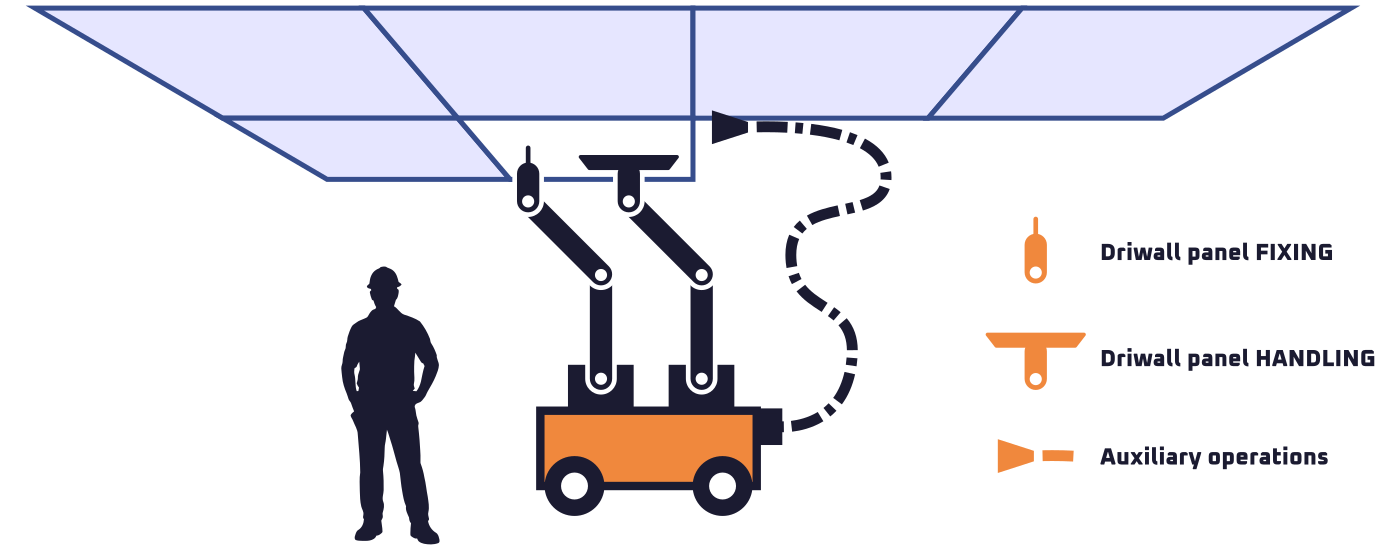
Construction problems
Manual construction of interior walls and ceilings is slow, strenuous, and prone to costly errors. Workers face heavy lifting, awkward coordination, and frequent injuries from handling bulky drywall. Even with care, misaligned panels and poor fastening are common, undermining structural quality and driving up rework. Insulation adds further problems, from VOC-emitting spray foams to uneven manual application that weakens a building’s energy performance. Waste piles up too, with excess materials and offcuts inflating costs and environmental impact.
The InnerShieldBot solution
InnerShieldBot transforms interior construction by merging panel handling, fixing, and insulation into one seamless robotic workflow. Its hybrid system — featuring dual robotic arms and a flexible continuum robot — delivers rapid, precise wall and ceiling assembly. Heavy lifting and awkward positioning are automated, boosting accuracy while easing physical strain on workers.
Together, these capabilities enhance structural and thermal performance while cutting waste and resource use. Guided by LiDAR and a BIM-powered digital twin, InnerShieldBot plans and executes tasks with exceptional accuracy. AI-driven reasoning keeps everything adaptable on the fly, improving quality and reducing on-site environmental impact, and a joint 3D scene reasoning framework will be implemented to interpret human-robot interactions and environmental semantics, ensuring a seamless collaboration between robots and human operators.


Inspection and maintenance of exterior building façades
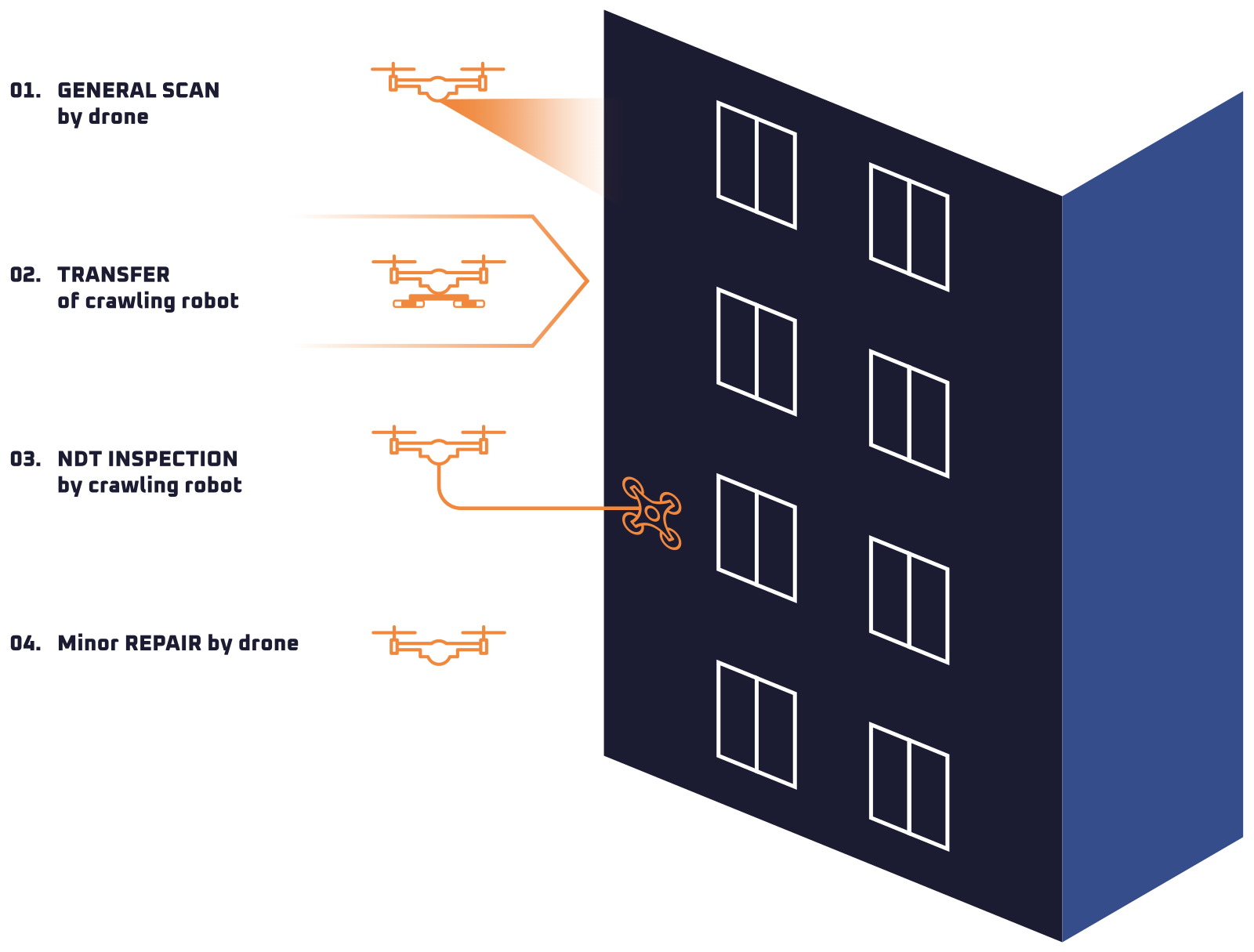
Maintenance problems
Exterior façade inspection and maintenance in high-rise or hard-to-reach areas is slow, costly, and risky. Traditional methods rely on scaffolding and cranes that clog urban spaces, disrupt pedestrians, and expose workers to dangerous heights. Manual inspections are inconsistent, often missing hidden defects and offering only limited insight from distant thermal scans. Targeted checks frequently demand invasive drilling or dismantling, adding time, cost, and disruption. And without precise structural data, follow-on tasks like insulation installation risk misalignment, inefficiency, and accidental damage to concealed building elements.
The InspectionShieldBot solution
InspectionShieldBot delivers a fully automated, scaffold-free solution for façade inspection and maintenance, removing the need for cranes or mast climbers. A smart drone performs rapid, high-resolution scans, mapping geometry, materials, and hidden structural elements with AI-optimised flight paths. All data feeds into the DigiShield BIM digital twin, enabling sharper, faster decision-making. For close-up checks, the drone deploys a crawling robot that uses non-destructive testing sensor to detect concealed defects without invasive methods. The crawler marks precise intervention points, while the drone can carry out minor repairs such as sealant application.
This seamless duo solution boosts safety, cuts costs, and accelerates inspections in even the hardest-to-reach areas.

Exterior façade insulation of multi-family dwellings
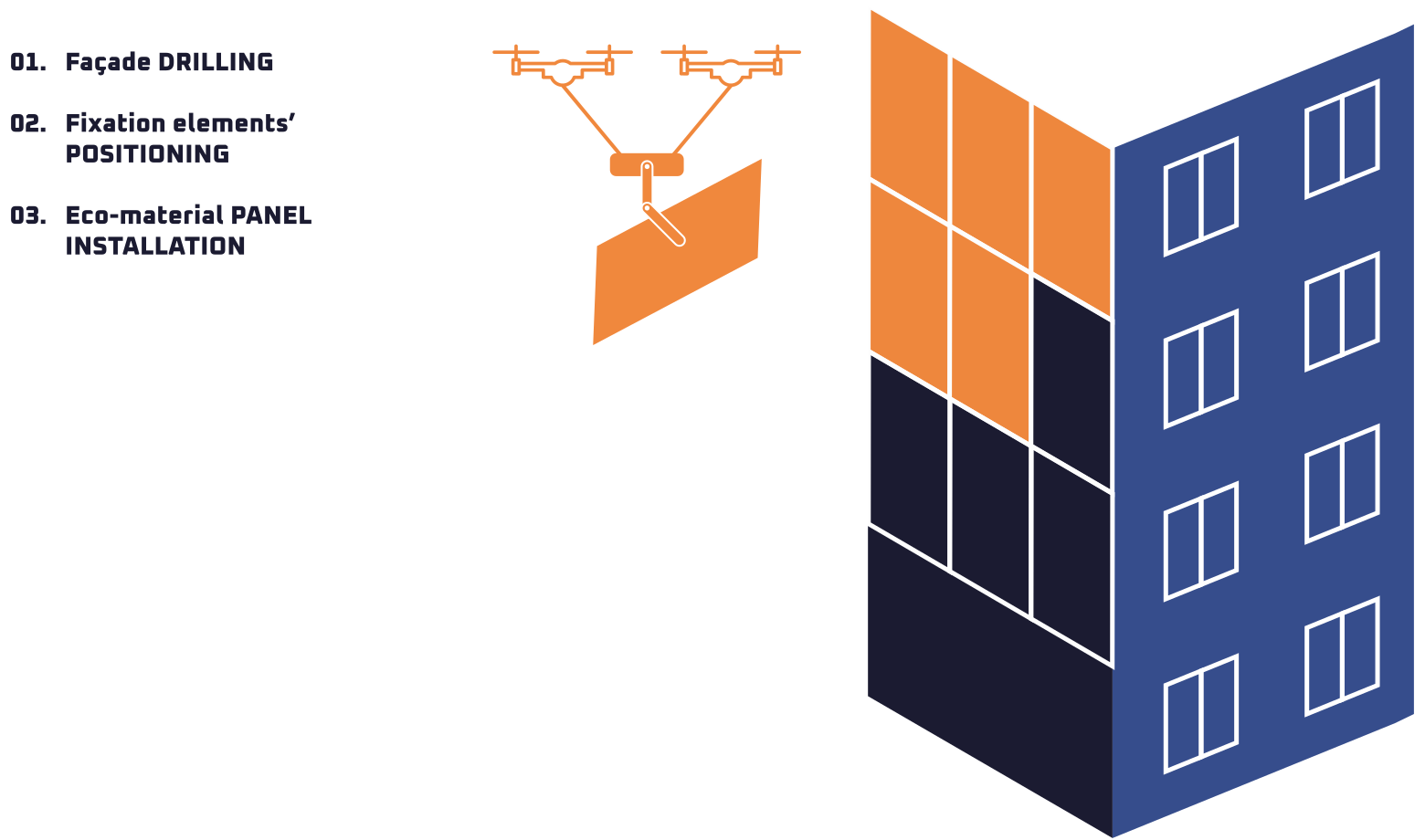
Renovation problems
Exterior insulation is still a largely manual job, slowed by scaffolding, cranes, and mast climbers that raise costs, risks, and disruption — especially in tight urban spaces. These access methods obstruct pedestrians, disturb residents, and expose workers to serious fall hazards. On-site drilling lacks precision, leading to misaligned holes, repeated attempts, and wasted time and materials. Such inefficiency not only delays projects but also weakens insulation performance and overall building energy efficiency.
The FaçadeShieldBot solution
FaçadeShieldBot transforms exterior insulation with a Cable-Driven Parallel Robot (CDPR), automating prefabricated panel installation. It removes the need for scaffolding, cutting costs, safety risks, and urban disruptions, even in narrow streets or courtyards. Heavy-lifting drones may further speed CDPR setup, while advanced control algorithms ensure precise drilling, positioning, and panel alignment. Real-time photogrammetry and vibration reduction prevent redundant holes, minimise material waste, and maintain long-term thermal performance.
Automation reduces human error, accelerates installation, and improves overall efficiency. Eco-friendly, bio-based panels lower environmental impact, supporting sustainable construction. Integrated with the DigiShield BIM digital twin, the system optimises planning, resources, and task execution for smarter, greener façade renovations.

