
News
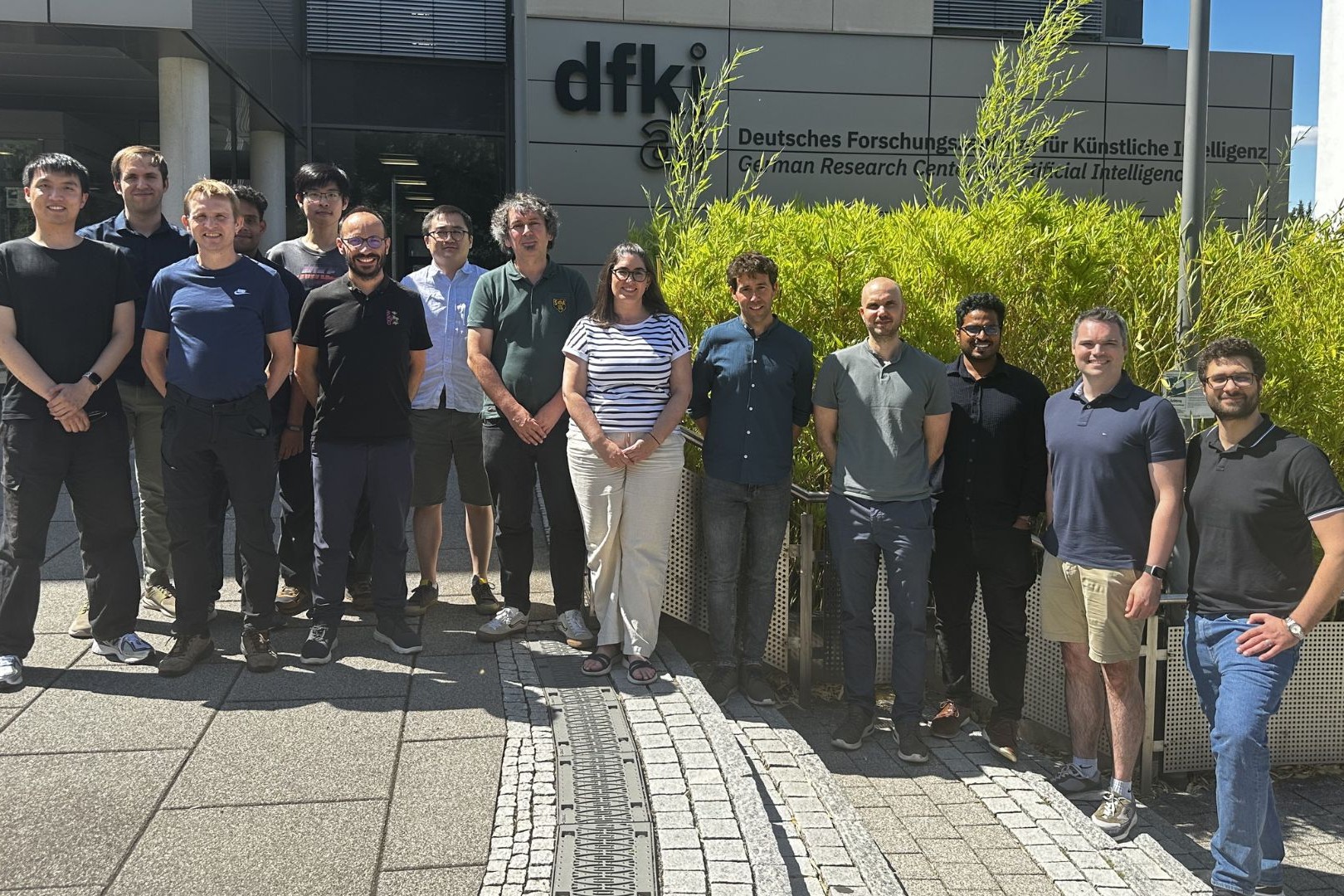
ShieldBot Work Package Leaders Meet in Kaiserslautern to Shape the Next Project Phase
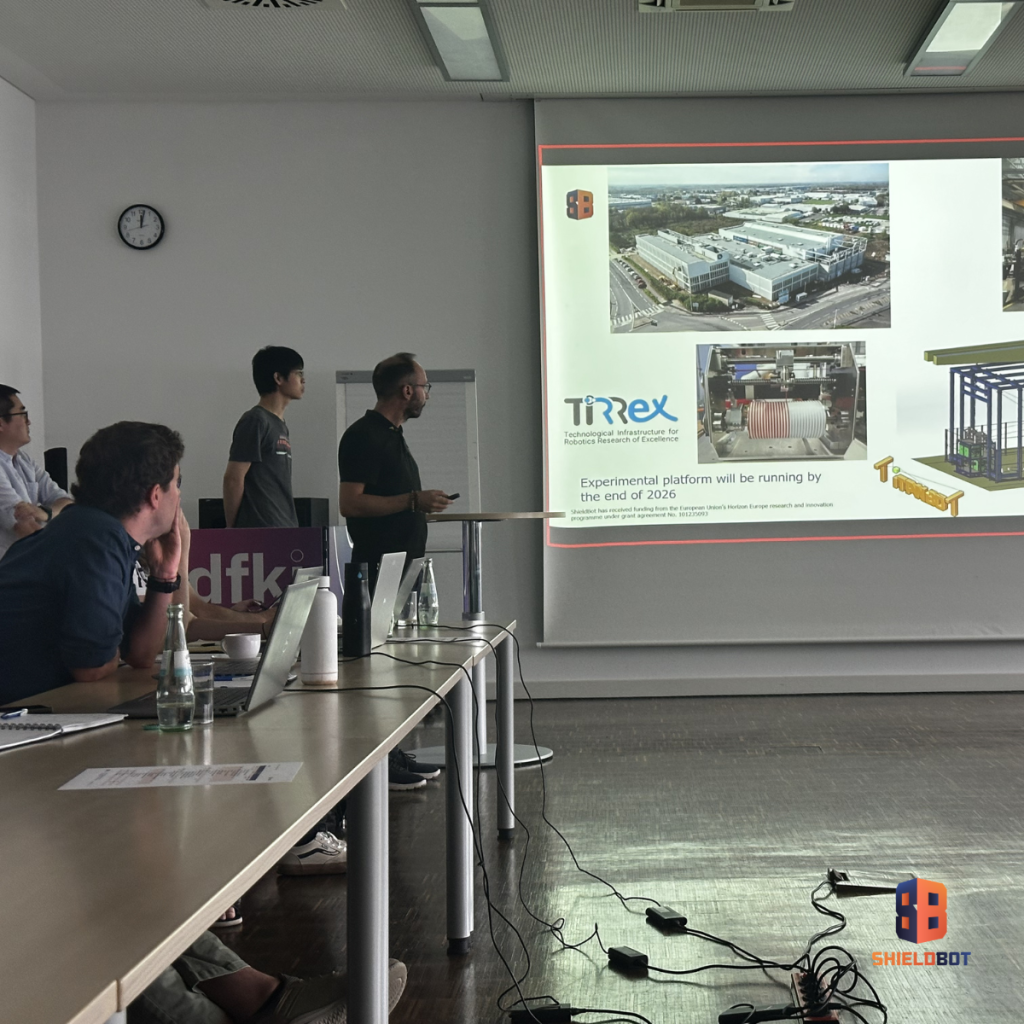
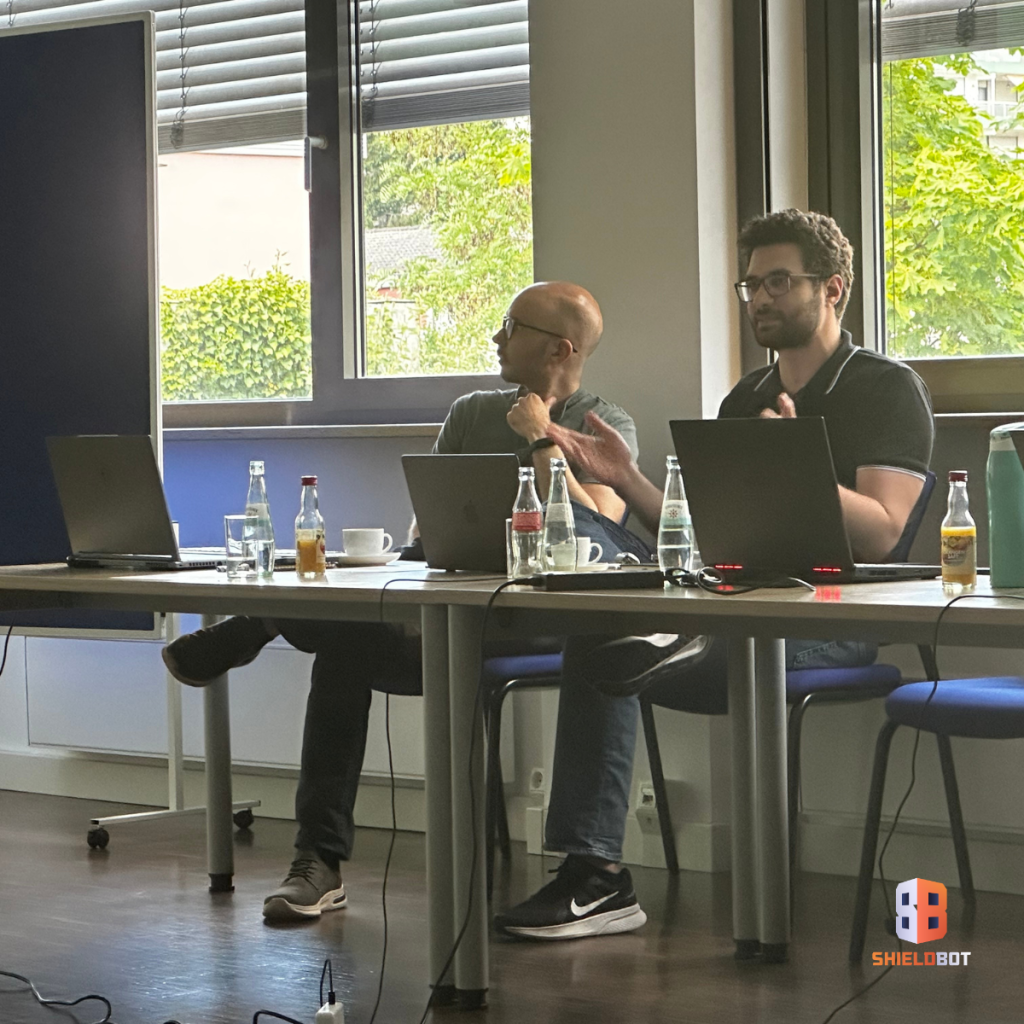
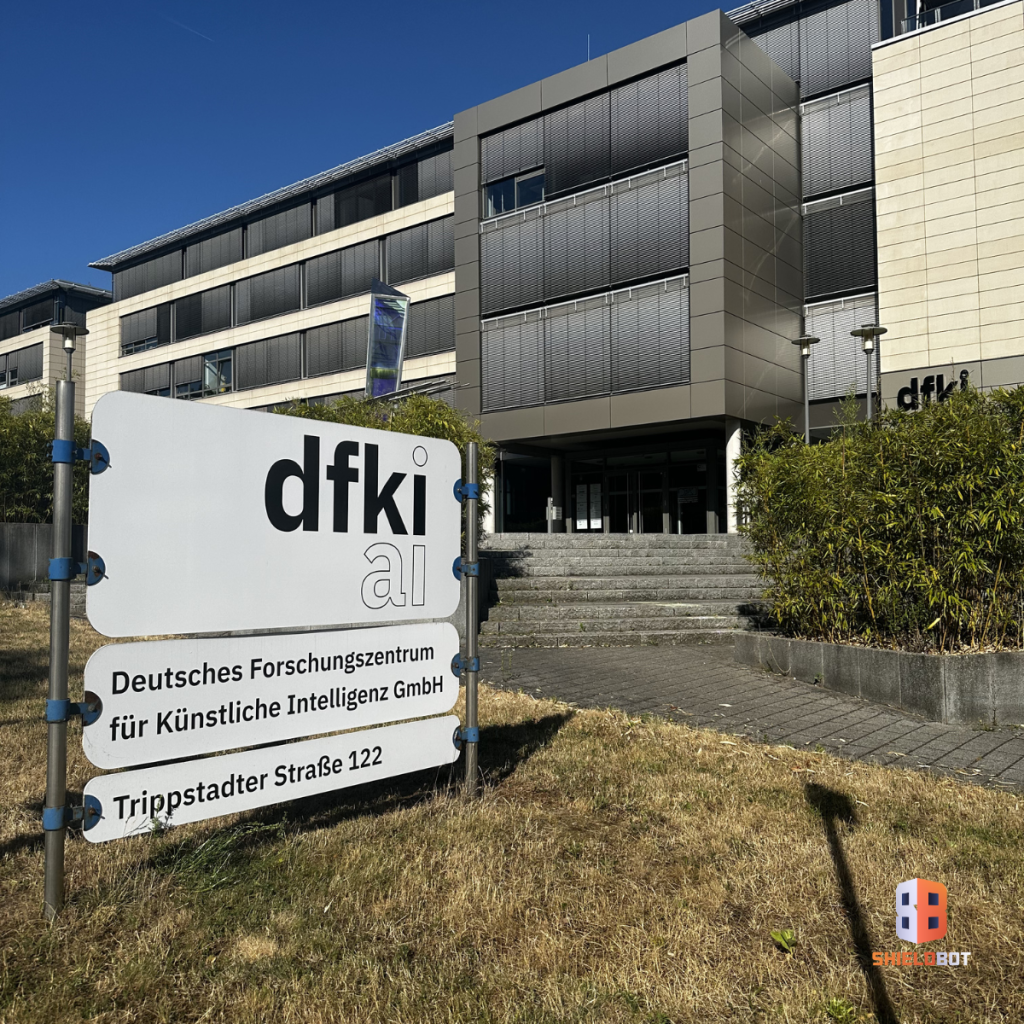
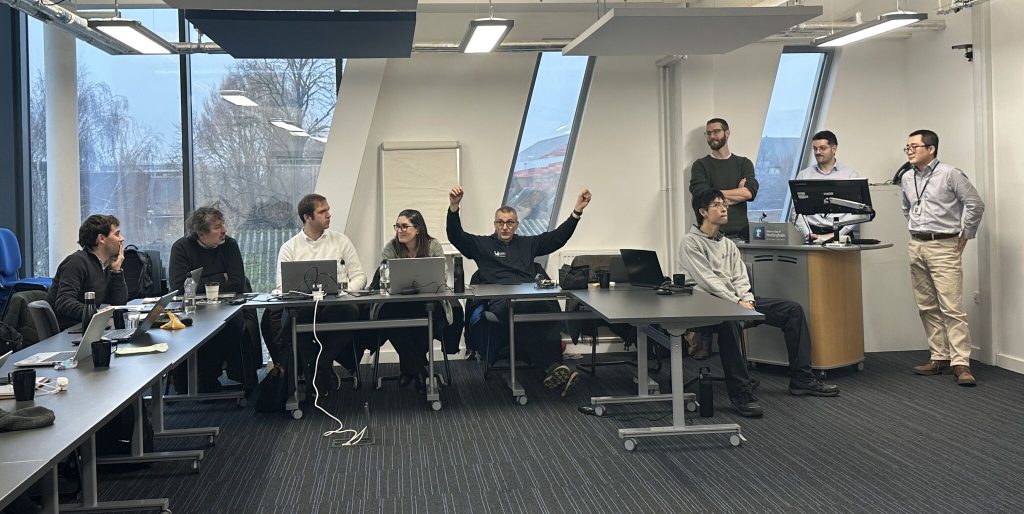
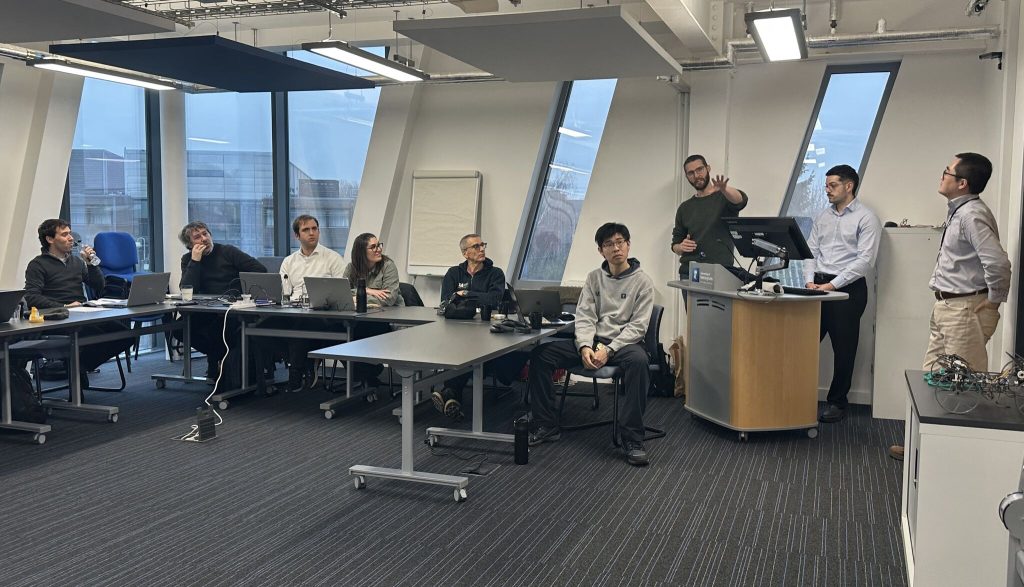
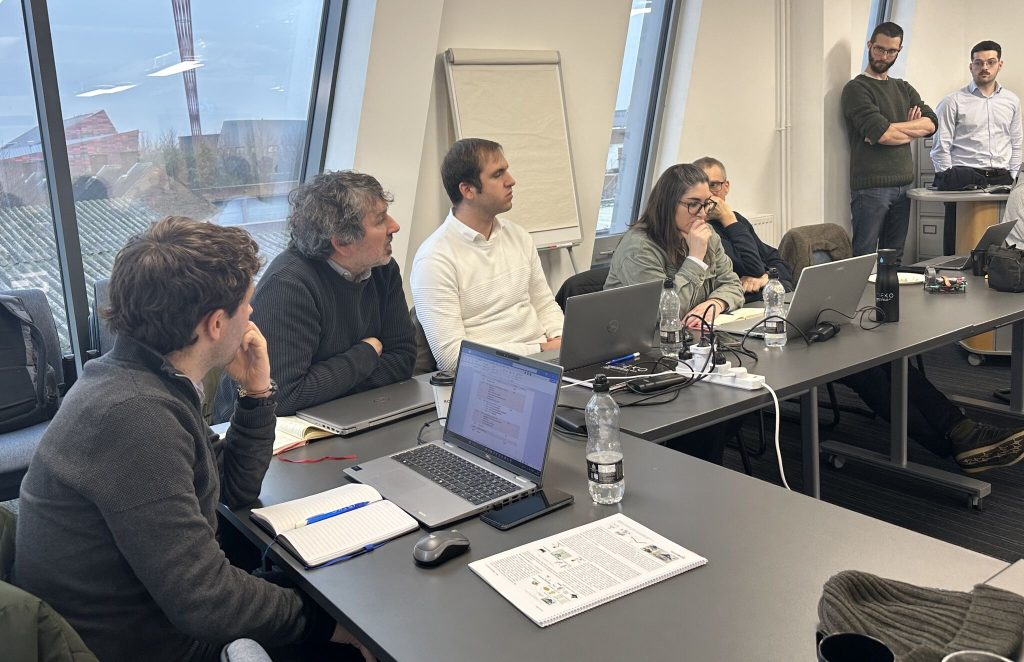
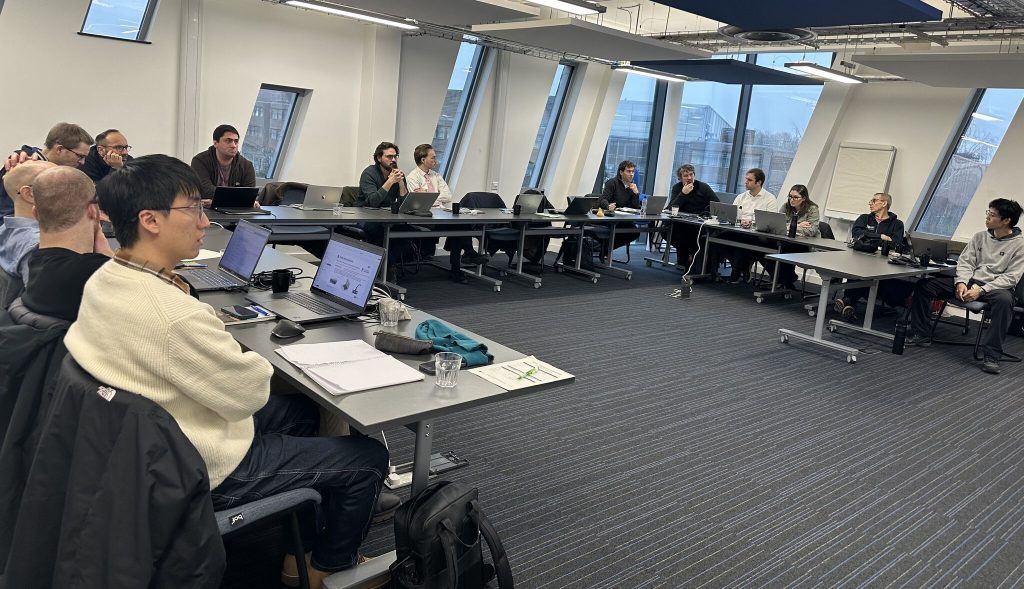
On the 2nd of July 2026, the ShieldBot consortium gathered at the German Research Center for Artificial Intelligence (DFKI) in Kaiserslautern, Germany, for its work package leaders meeting.
Hosted by Jason Rambach, Research Group Leader in AI Perception at DFKI, the meeting brought together project partners to review progress across the different work packages, discuss technical and administrative developments, and align priorities for the next phase of ShieldBot, starting its second year in November 2026.
Addressing ShieldBot’s Challenges to Maximise Impact in Construction
Jason opened the meeting welcoming all participants to the Institute, and provided a brief introduction to DFKI's research activities.
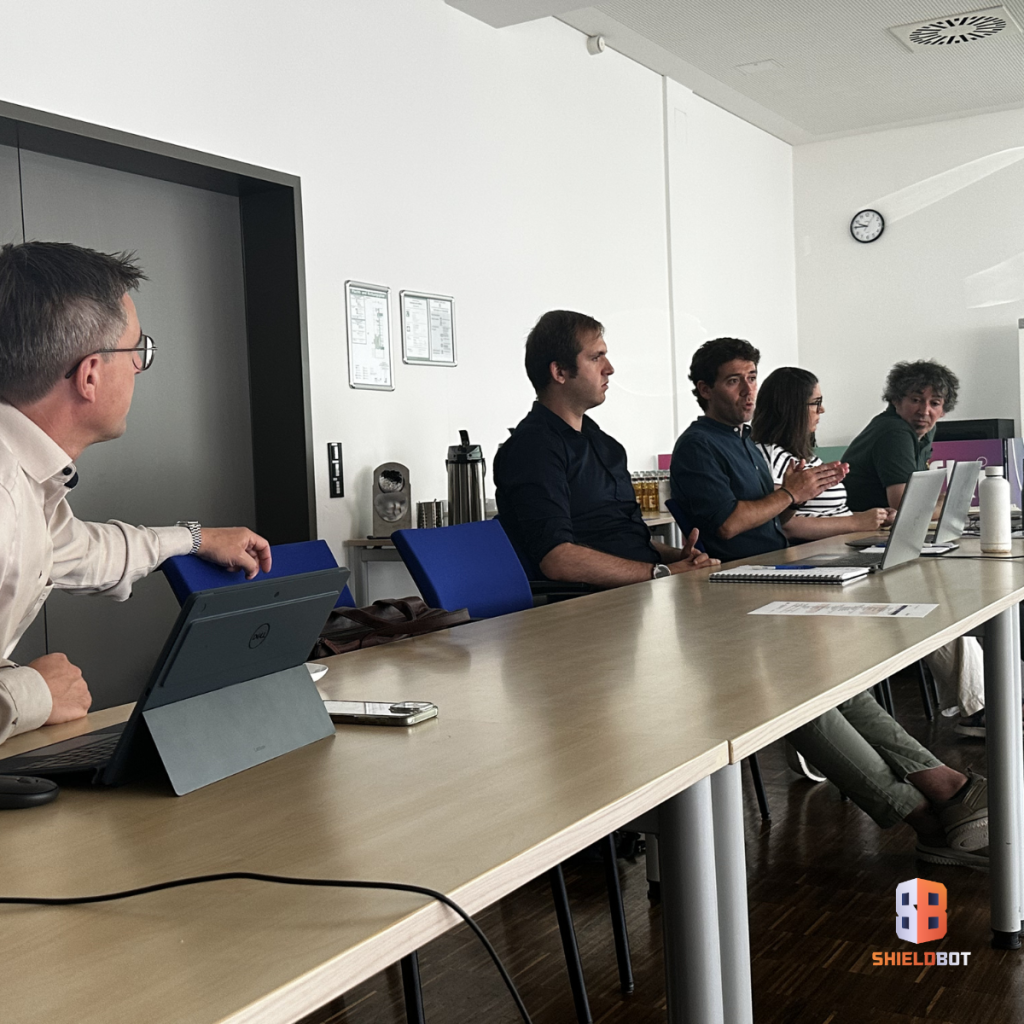
The morning session focused on project coordination and management activities. Partners reviewed the overall work plan, milestones, deliverables, and administrative matters. A key part of the discussions centred on the challenges identified during the first months of the project and the refinement of the suggested adaptations in the robotic solutions.
The ShieldBot team also revisited the industry requirements proposed by Bouygues Construction, as well as the key performance indicators (KPIs), to ensure that our robotic solutions meet the end-users needs ultimately, enhancing the impact of the project within the construction sector.
ShieldBot's Robotic Solutions
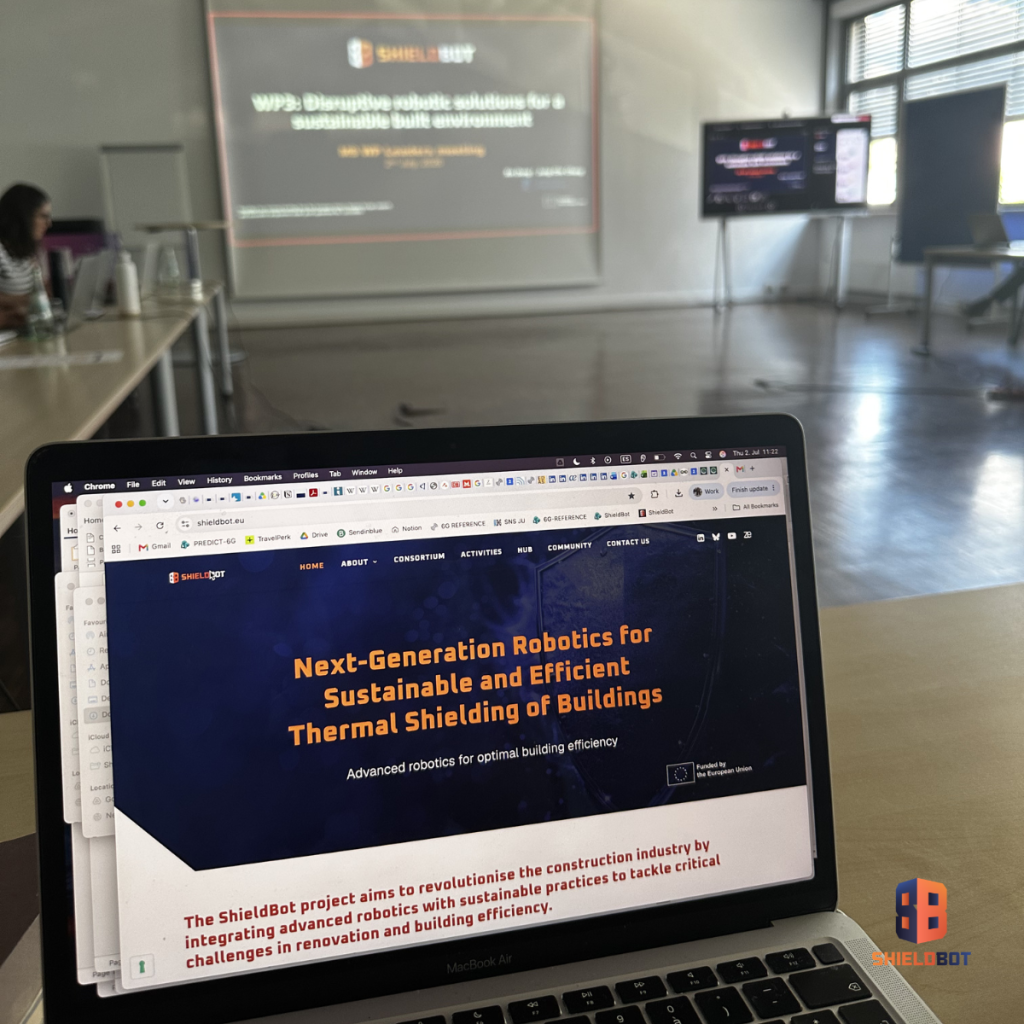
Dedicated sessions were held for the project's technical work packages, where each leader presented recent achievements, current activities and plans for the next six months. Partners showcased progress on the three main robotic innovations:
- InnerShieldBot
- InspectionShieldBot
- FaçadeShieldBot
The University of Nottingham presented a demo on a crawling robot designed for façade inspection while Nantes Université and CNRS showed their experimental testing platform used for controller activation and validation.
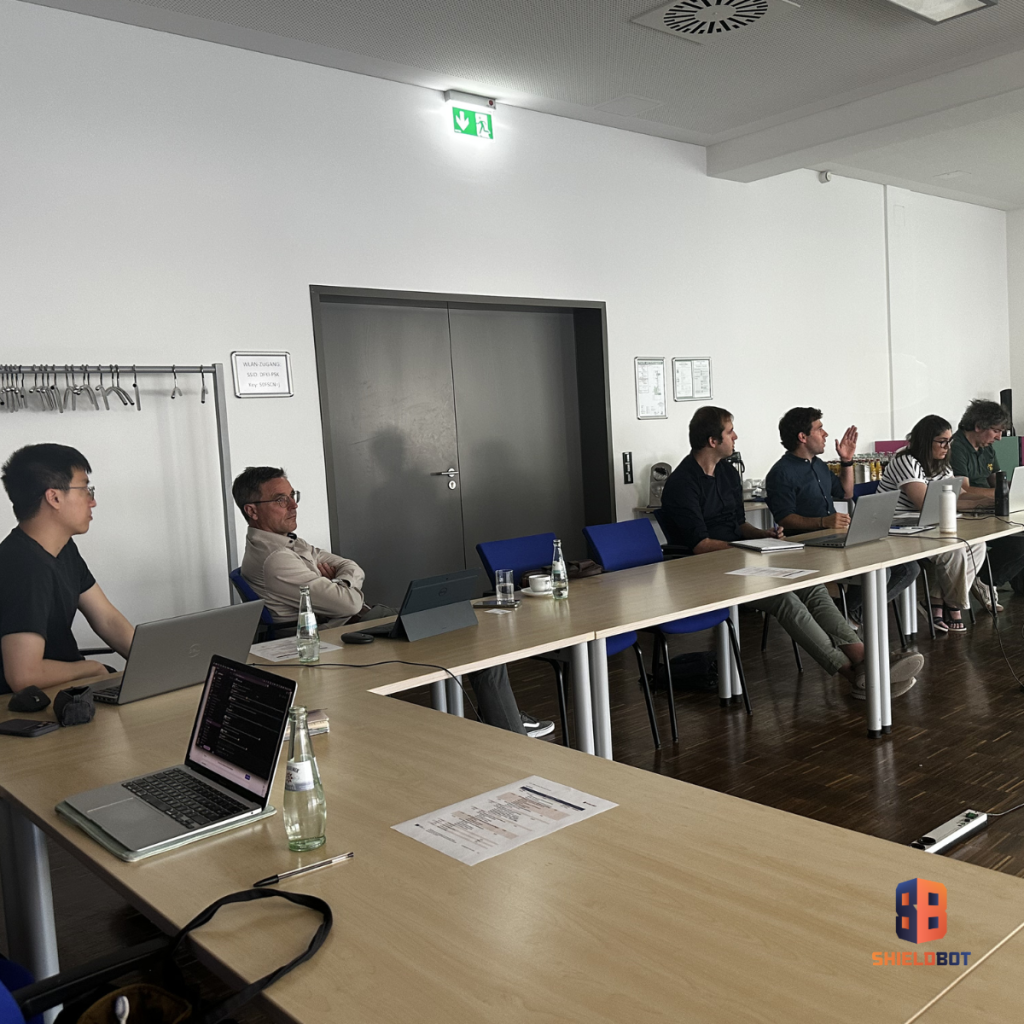
The afternoon sessions explored the project’s solutions enabling robot perception and human-robot interaction, mainly based on cameras and sensors to improve environmental perception, precision and operational stability.
EcoShield and DigiShield
The consortium also reviewed progress on EcoShield, where work has focused on selecting and now testing sustainable materials, alongside developments within DigiShield and its Building Information Modelling (BIM) digital twin.
DFKI and RPTU presented their latest achievements in Scan-to-BIM technologies, demonstrating semantic segmentation techniques capable of transforming building scans into detailed 3D digital models. These different techniques were applied to the building floor scanned in Paris, part of a renovation project from Bouygues Construction, in May 2026.
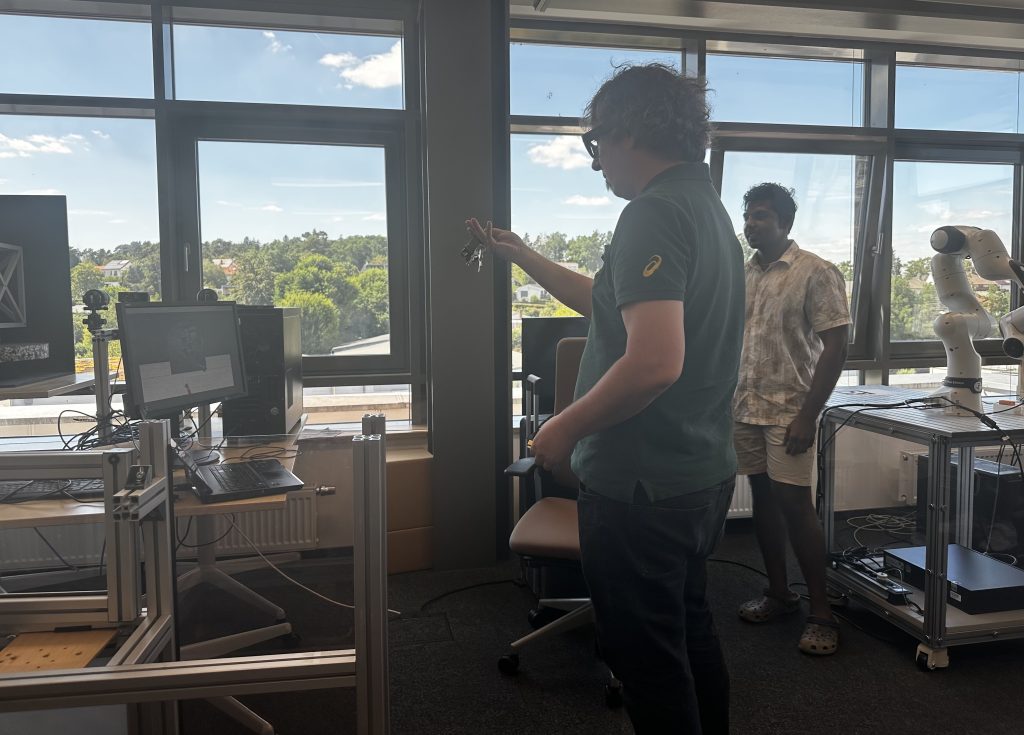
Visiting DFKI's Robotics Facilities
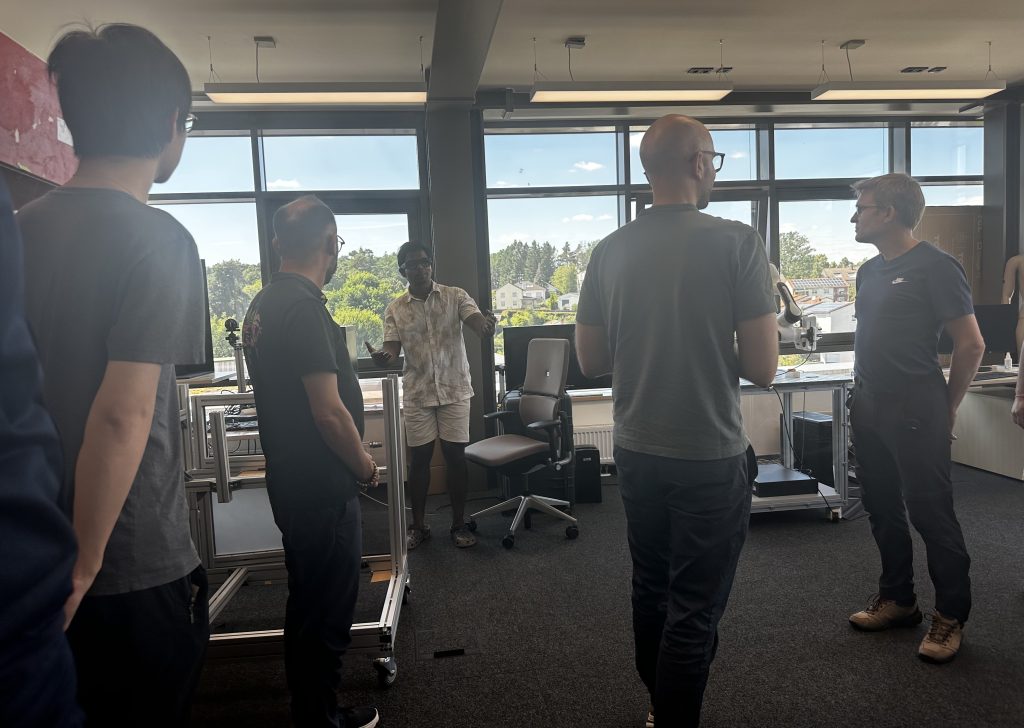
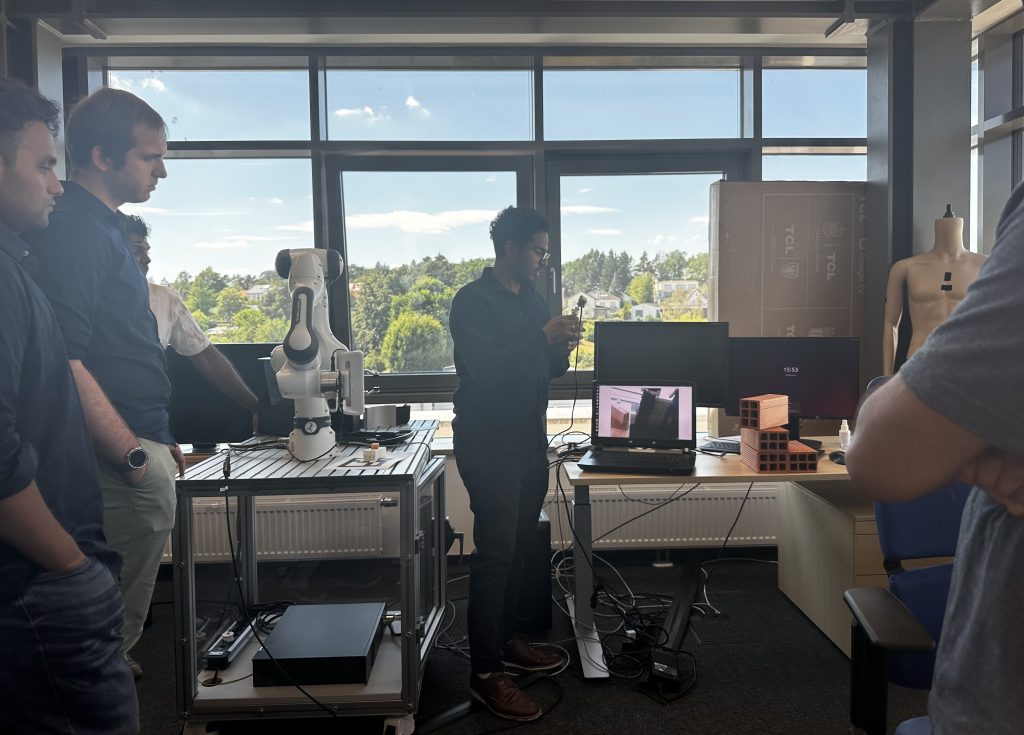
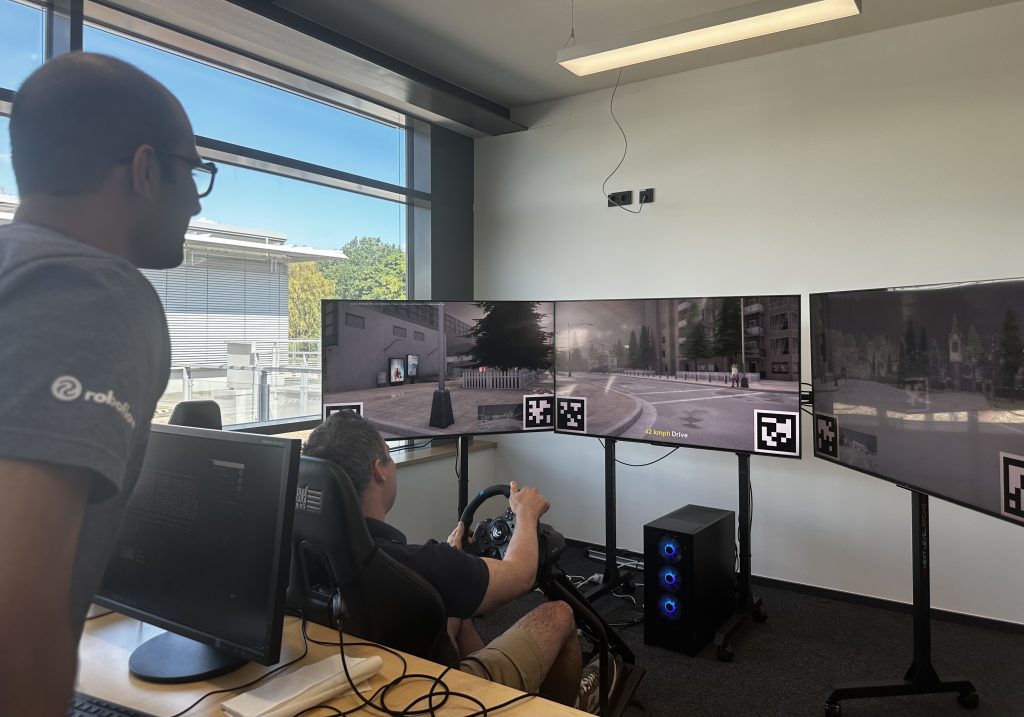
DFKI organised a visit to its research facilities, showcasing a range of innovative robotics and artificial intelligence (AI) demonstrations, including eye tracking while driving to ensure safety and compliance, glasses with a camera that translates your hands movement into a digital twin of the room, and a camera device coupled with a decision-making algorithm to help a robot pick up the best brick in a stack when requested.
The day finished with a traditional dinner at a local biergarten, offering partners the opportunity to continue the discussions in an informal setting while strengthening collaboration across the consortium.
How Can Robotics, Artificial Intelligence and Intelligent Automation Transform Europe’s Construction Industry?
RADIANCE, RoboCons and ShieldBot answer this question. These three Horizon Europe projects are working towards a safer, smarter and more sustainable construction industry supported by advanced robotics, artificial intelligence (AI) and intelligent automation solutions.
RADIANCE: Robotic, Automated and Digital Solutions for Building Renovation
Building renovation is becoming increasingly important as Europe seeks to improve energy efficiency and reduce carbon emissions. The Horizon Europe project RADIANCE addresses this challenge by proposing an integrated suite of robotic, digital and AI-based technologies that support the entire renovation lifecycle.
From building inspection and diagnosis to repair operations, safety monitoring, planning and sustainability assessment, RADIANCE brings together multiple technologies into a single ecosystem. Through three real-life demonstration scenarios across Europe, the project is validating solutions designed to accelerate renovation workflows, assist construction professionals with advanced digital tools, improve worker safety and reduce the environmental footprint of renovation activities.
RADIANCE brings together 12 leading organisations from seven European countries, combining expertise in robotics, automation, AI, construction, digitalisation, and sustainability, coordinated by Universidade de Vigo (Spain).
RoboCons: Advancing Cooperative Robotics for Sustainable Construction
RoboCons shares the vision of a more automated construction industry emphasising cooperation between humans and machines.
The project is developing innovative human-centred robotic and AI solutions that enable seamless collaboration between construction workers and robotic systems. Coordinated by CONSTRUCCIONES ACR (Spain) and bringing together 14 partners from across Europe, RoboCons is creating a Robot-Human Adaptive Construction Ecosystem alongside a Digital Construction Platform.
These technologies will improve productivity, reduce material waste, enhance worker safety and support the construction sector's digital transformation. By ensuring that robots adapt to human operators, RoboCons promotes safe, efficient and practical deployment of collaborative robotics on construction sites.
ShieldBot: Advanced Robotics for Optimal Building Efficiency
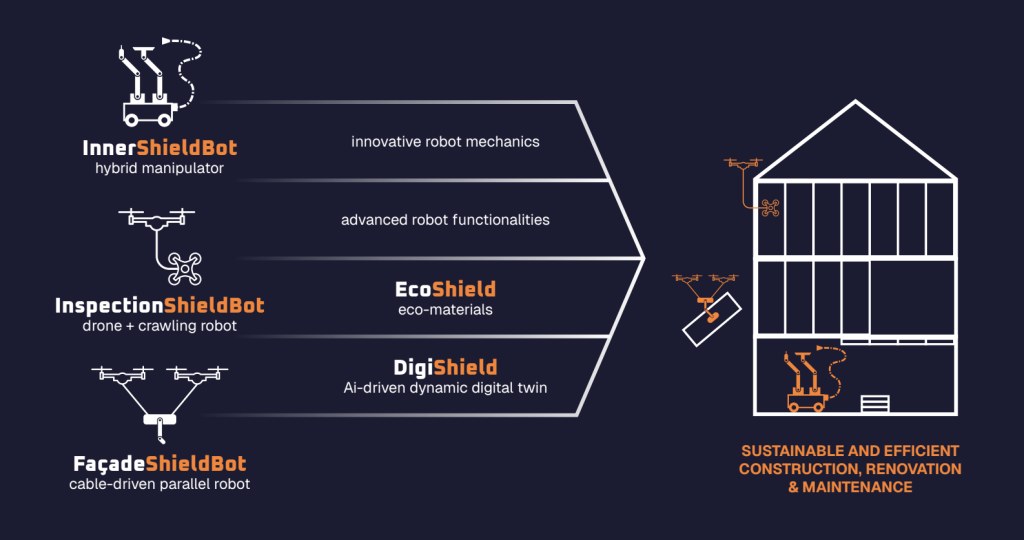
As the demand for energy-efficient buildings grows, traditional construction methods fall short in meeting modern sustainability standards. ShieldBot intends to address this gap through the deployment of three specialised robotic solutions that enhance the energy efficiency of buildings while reducing environmental impact:
- InnerShieldBot is designed for internal construction works, applying similar thermal shielding to walls and ceilings to enhance comfort and efficiency.
- InspectionShieldBot utilises advanced sensors to assess building exteriors, identifying areas needing repair or insulation, ensuring maintenance and sustainability.
- FaçadeShieldBot focuses on installing thermal shielding on building façades, improving insulation and reducing energy consumption.
These robotic systems are supported by DigiShield, a digital twin platform that aggregates and analyses data from on-site operations, enabling real-time decision-making and precise project planning, and EcoShield, innovative, eco-friendly materials for insulation solutions to further minimise the carbon footprint of construction activities.
ShieldBot emphasises the integration of human-robot collaboration to ensure that robotic solutions support rather than replace human workers, enhancing safety and efficiency on-site. The consortium if formed by 11 research and industrial partners from six European countries (including Ukraine and United Kingdom), coordinated by IDEKO, bringing together a balanced mix of expertise in research, technology development, industry, and dissemination.
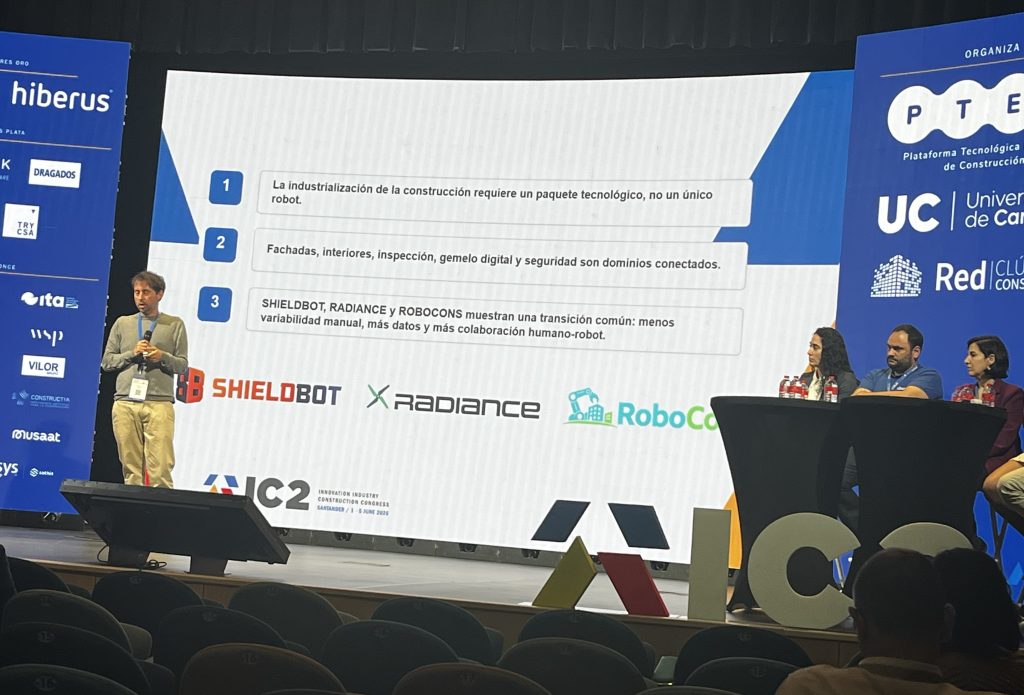
RADIANCE, RoboCons and ShieldBot at the Innovation Industry Construction Congress 2026
Ibai Inziarte, Innovation Director at Aldakin and Dissemination and Communication Lead for RoboCons, explained these solutions in the presentation "Industrialisation of Construction through Collaborative Robotics and Intelligent Automation: ShieldBot, RADIANCE, RoboCons", during the Innovation Industry Construction Congress (IC2) 2026, held in Santander, Spain, on 1-5 June 2026.
Access the full presentation on Zenodo.
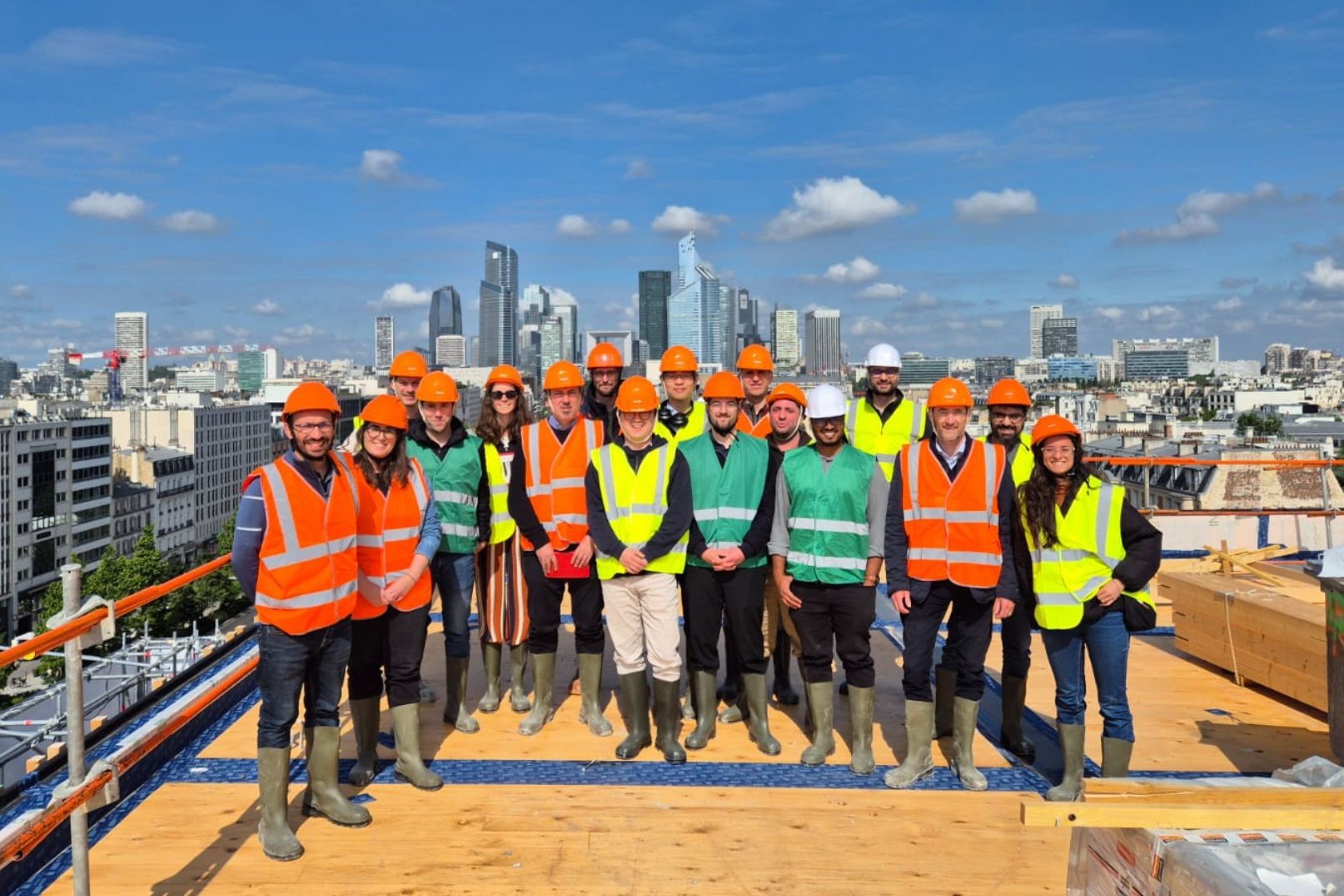
The ShieldBot Team Meets in France for the Project’s Second General Assembly Hosted by Bouygues Construction
On 6 and 7 May 2026, Bouygues Construction welcomed the ShieldBot Consortium to Guyancourt and Neuilly-sur-Seine (France) for its second General Assembly.
Over two days of technical briefings, discussions and field activities, partners evaluated the progress since the project’s launch in November 2025, and defined the path towards the development of next-generation robotic solutions for sustainable construction, renovation and maintenance.
This is the third time the whole consortium meets in person, after the kick-off meeting in Elgoibar, Spain, and the first general assembly in Nottingham, United Kingdom.
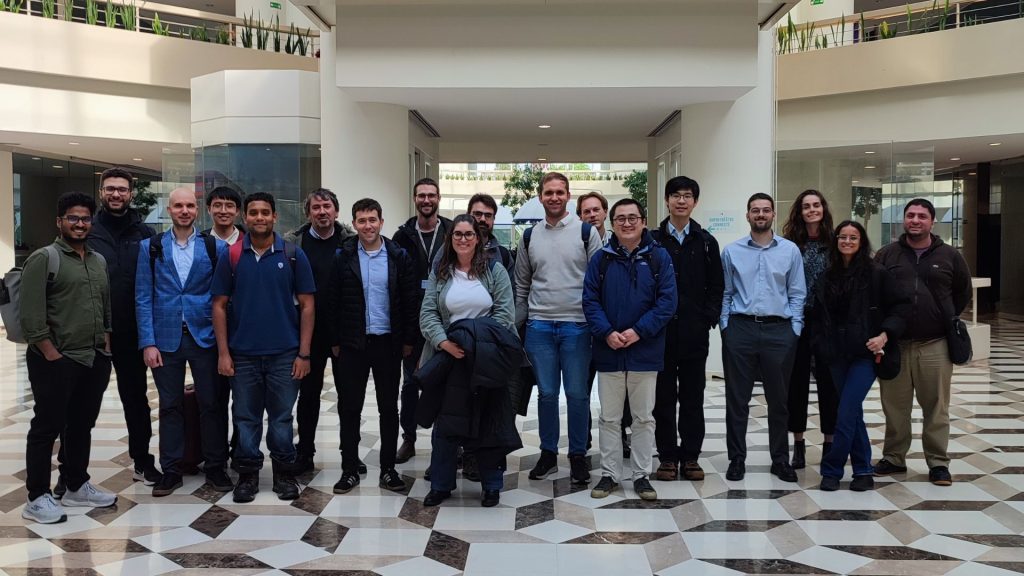
ShieldBot’s Work Package 2 ‘Requirements and KPIs definition’ Completed
The meeting took place at Bouygues Construction’s headquarters in Guyancourt, and was organised by Christian De Nacquard, Research & Development (R&D) Innovation Director, Alexandre Picot, R&D Project Manager, and Florian Dufour, R&D Engineer.
The first day focused on the technical and managerial progress of the project’s work packages. Sessions covered project management and coordination activities, dissemination and exploitation plans, as well as advancements in robotic solutions, advanced robot functionalities, and construction site technologies. Partners also reviewed milestones, deliverables, and priorities for the next six months.
The recent completion of Work Package 2 (WP2) ‘Requirements and KPIs definition’, led by Bouygues Construction, was one of the highlights of the meeting. The consortium further refined and consolidated the industry requirements, as well as the Key Performance Indicators (KPIs) definition, which underpin the technical developments planned for the coming stages of the project.
First Visit to a Renovation Site
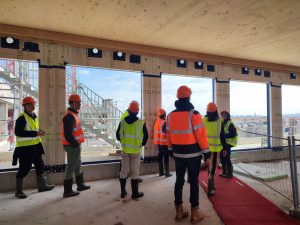
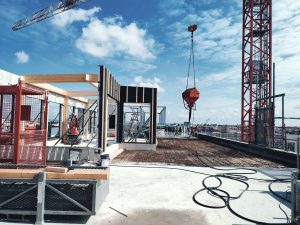
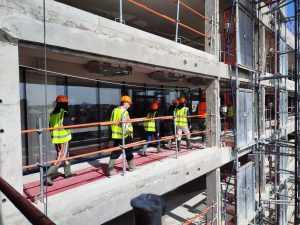
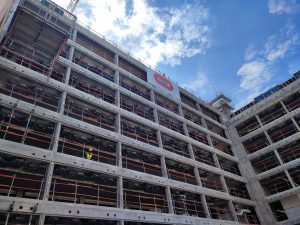
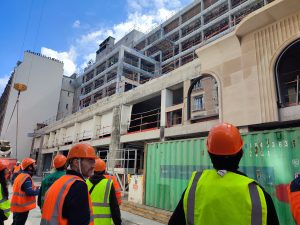
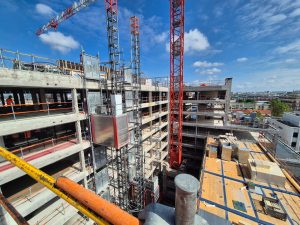
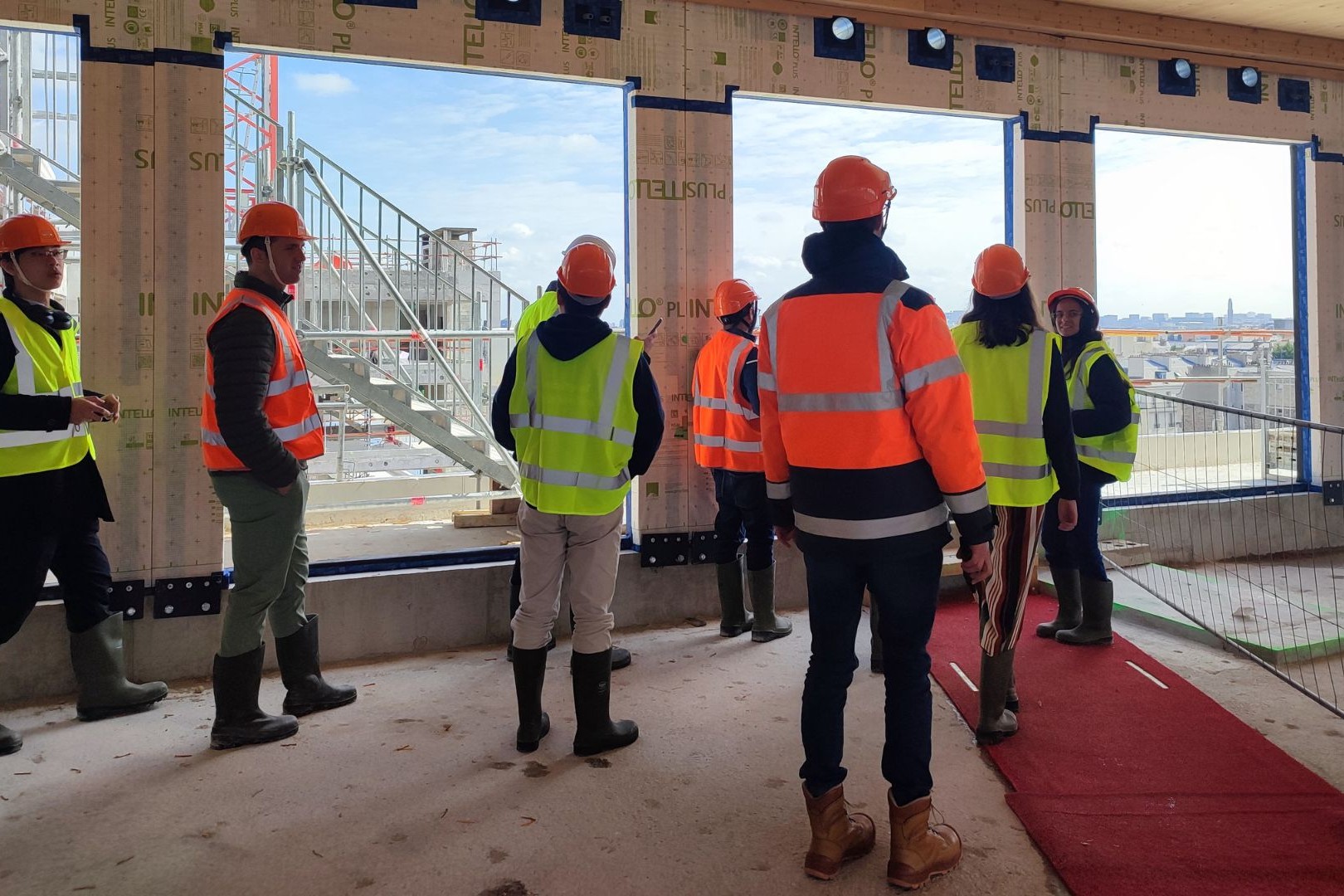
On the second day, partners visited Les Arches du Carreau, a heavy renovation site conducted by a Bouygues Construction subsidiary especialised in renovation, Bouygues Bâtiment IDF - Rénovation Privée. This construction is located in the Avenue Charles de Gaulle in Neuilly-sur-Seine, linking Paris via the Arc de Triomphe and La Défense.
The renovated building is a mixed-use development comprising office space and the covered Market of Neuilly on the first floor. The project is a typical example of deep refurbishment combined with new construction; indeed, the entire building was stripped back to its core structure, and a four-storey wooden elevation was added.
The visit provided the consortium with a valuable opportunity to observe real construction challenges and discuss how ShieldBot technologies can support safer, more sustainable, and more efficient renovation processes in real-world environments. It was conducted by Thomas Mathieu, Project Director of this site, who offered the partners the possibility to view:
- Strict operational constraints in a dense urban environment such as noise, workings hours, and logistic limitations.
- The scheduling reality of constructions: 22 months schedule to renovate 35.000 sqm.
- The detail of the false ceiling mechanical and electrical (M&E) systems to better understand the InspectionShieldBot.
- Plaster boards dimension for the InnerShieldBot.
- Layers of the façade in detail for the FaçadeShiedlbot.
As highlighted by Miren Zelaia, Project Manager at IDEKO, the organisation coordinating ShieldBot:
“The recent completion of WP2 has allowed us to go deeper into the developments we are going to carry out, and the visit to Bouygues’ renovation site was truly impressive.” - Miren Zelaia, Project Manager at IDEKO.
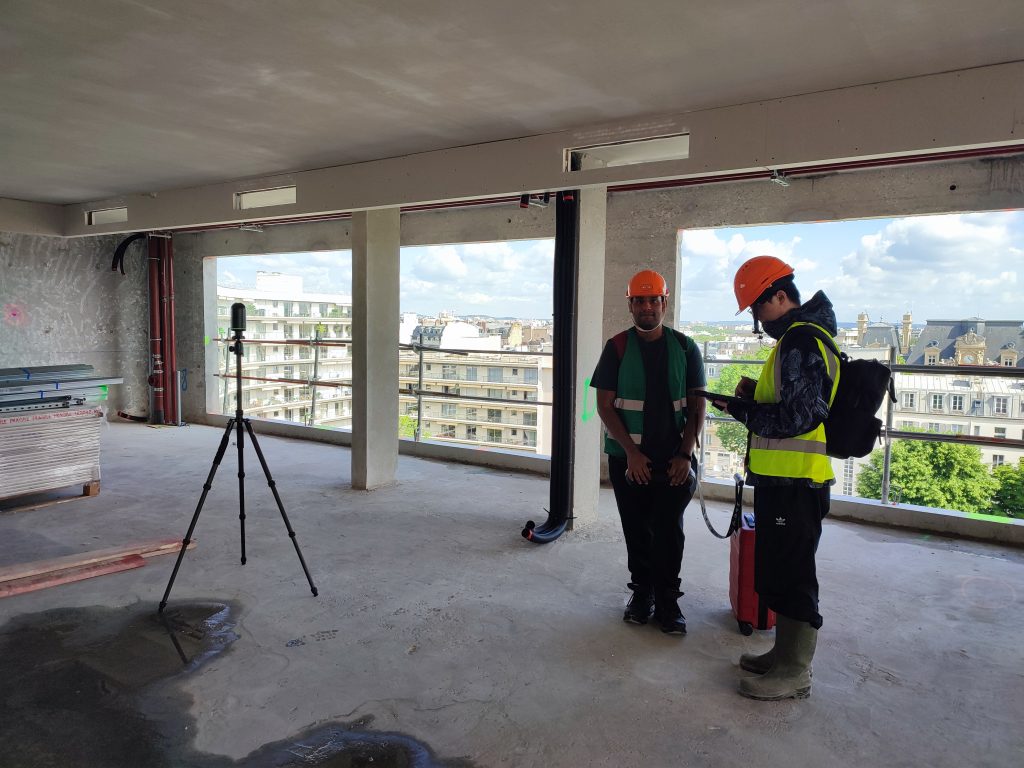
During this activity, Sandeep Inuganti, PhD Candidate at DFKI and RPTU Kaiserslautern, and Cheng Lu, Research Associate at RPTU Kaiserslautern, scanned of one of the construction areas, preparing future work related to digitalisation and advanced site technologies.
Xin Dong, Associate Professor at the University of Nottingham, also observed that it was stimulating to see the potential impact that robotic technologies can have to address challenges in such complex and demanding construction environments. He highlighted:
"Visiting Bouygues Construction’s renovation site was extremely inspiring for us. It allowed us to see, from the end user’s perspective, the real challenges that our robotic inspection solution needs to address in complex and dynamic construction environments. We believe robotics can not only reduce the manual burden of inspection and make site information collection faster and more consistent, but also open new possibilities for future building design. By reducing the need to design inspection and maintenance access around human limitations, robotic technologies can ultimately provide greater design freedom while supporting safety, quality and sustainability throughout the building lifecycle." - Xin Dong, Associate Professor at the University of Nottingham.
We would like to thank Bouygues Construction for hosting the meeting and organising the renovation-site visit!

The ShieldBot Partners Launch the Project in Elgoibar to Advance Robotics for Optimal Building Efficiency
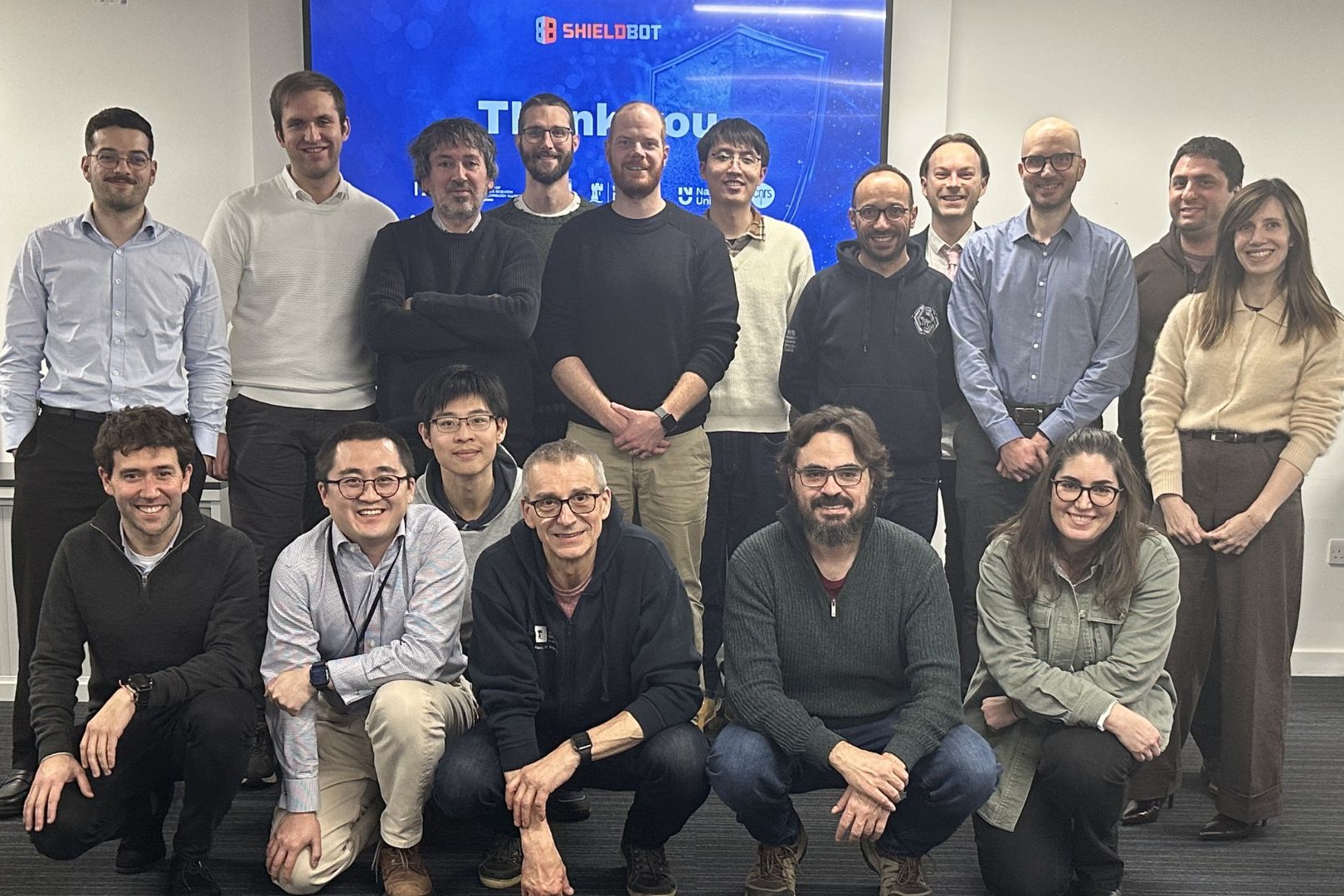
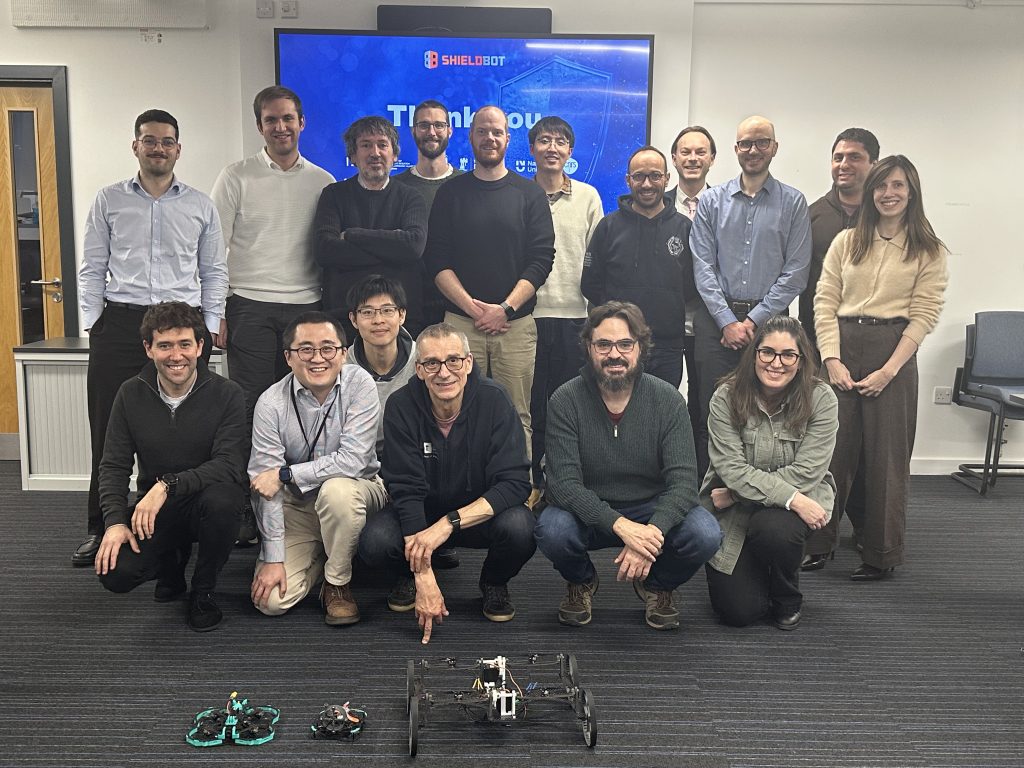
On the 4th and 5th of November 2025, the ShieldBot consortium gathered in person for the first time at the facilities of IDEKO, our coordinator, in Elgoibar, a picturesque town in the Basque Country (Spain) to kick-off the project. ShieldBot, “Next-Generation Robotics for Sustainable and Efficient Thermal Shielding of Buildings”, is set to revolutionise the construction industry by integrating advanced robotics with sustainable practices to tackle some of the most pressing challenges in building renovation and energy efficiency.
As the demand for energy-efficient buildings continues to grow, traditional construction methods often struggle to keep pace with modern sustainability standards. ShieldBot bridges this gap with three of innovative robotic solutions:
- InnerShieldBot applies internal thermal shielding to walls and ceilings, enhancing comfort and efficiency.
- InspectionShieldBot employs advanced sensors to assess building exteriors, identifying areas requiring repair or insulation upgrades.
- FaçadeShieldBot installs thermal shielding on façades to improve insulation and reduce energy consumption.
Complementing these systems, the DigiShield digital twin collects and analyses data from robot operations, enabling real-time decision-making and precise project planning, and the inclusion of EcoShield materials (eco-friendly, sustainable insulation options) further supports our mission to minimise the carbon footprint of modern construction. All under a human-robot collaboration approach, ensuring technology enhances, rather than replaces, human expertise, making on-site work safer, smarter, and more efficient.

The ShieldBot Consortium: 11 Partners from 6 European Countries
With 11 research and industrial partners from six European countries (including Ukraine and United Kingdom), the ShieldBot consortium is united by a shared vision to work together during the next three years: to set a new benchmark for sustainable construction and renovation, paving the way for a more efficient and environmentally responsible future in urban development.
Our kick-off meeting in Elgoibar started with a welcome and general project presentation led by Jokin Muñoa, Scientific Manager at IDEKO and ShieldBot Coordinator, in which he introduced ShieldBot and the robotic technologies that we will develop from Technology Readiness Level (TRL) 3 to TLR5, highlighting our objectives, activity areas and demonstrators. He also focused on the ShieldBot work distribution, including our work plan, gantt chart, milestones, deliverables and expected results.


After Jokin Muñoa, Miren Zelaia, Project Manager at IDEKO, explained the Work Package (WP) 1: 'Management and Coordination Activities', focusing on the financial statements and administrative management. This first part of our kick-off meeting finished with the introduction of our Project Officer from the European Commission, Rebecca Kanellea, Project Manager at CINEA, the European Climate, Infrastructure and Environment Executive Agency.
Then it was the turn for the ShieldBot partners, who introduced each of their organisations to present their background, expertise and activities: IDEKO, Deutsches Forschungszentrum für Künstliche Intelligenz (DFKI), Rolls-Royce UTC in Manufacturing and On-Wing Technology / University of Nottingham, Nantes Université, Laboratoire des Sciences du Numérique de Nantes (LS2N) / CNRS, Robotnik Automation, Bouygues Construction, RPTU Kaiserslautern-Landau, Neo-Eco, Neo-Eco Ukraine, and AUSTRALO.
The ShieldBot Work Packages
During the rest of the meeting, a discussion of each of our work packages was the central point of the agenda. We started with the WP2: 'Requirements and KPIs Definition', led by Bouygues Construction, followed by the WP3: 'Disruptive Robotic Solutions for Sustainable Built Environment', led by the University of Nottingham; the WP4: 'Advanced Robot Functionalities for Construction and Renovation', led by IDEKO; the WP5: 'Advanced Construction Site Technolgies', led by DFKI; the WP6: 'ShieldBot Demonstrators', led by Nantes Université, and last but not least, the WP7: 'Dissemination and Exploitation', managed by AUSTRALO.
But we not only presented each of our work packages, Bouygues Construction also hosted a workshop on WP2 in which all partners participated in a brainstorming session.

A Guided Tour of IDEKO, the ShieldBot Project Coordinator
The kick-off meeting is an inaugural gathering that formally launches a newly Horizon Europe funded project, in our case, ShieldBot, bringing together all members of the consortium for the first time in person.
This meeting provides an opportunity for partners to introduce themselves, begin building working relationships, and gain a clear understanding of each organisation’s role, responsibilities, and planned contributions. That is why during our kick-off, IDEKO offered us a guided tour around their facilities in Elgoibar to explain the research and innovation activities carried out there, specialised in advanced manufacturing technologies developed in four research groups: Dynamics and Control, Design and Precision Engineering, Information and Communication Technology (ICT) and Automation and Manufacturing Processes.


