
Month: October 2026
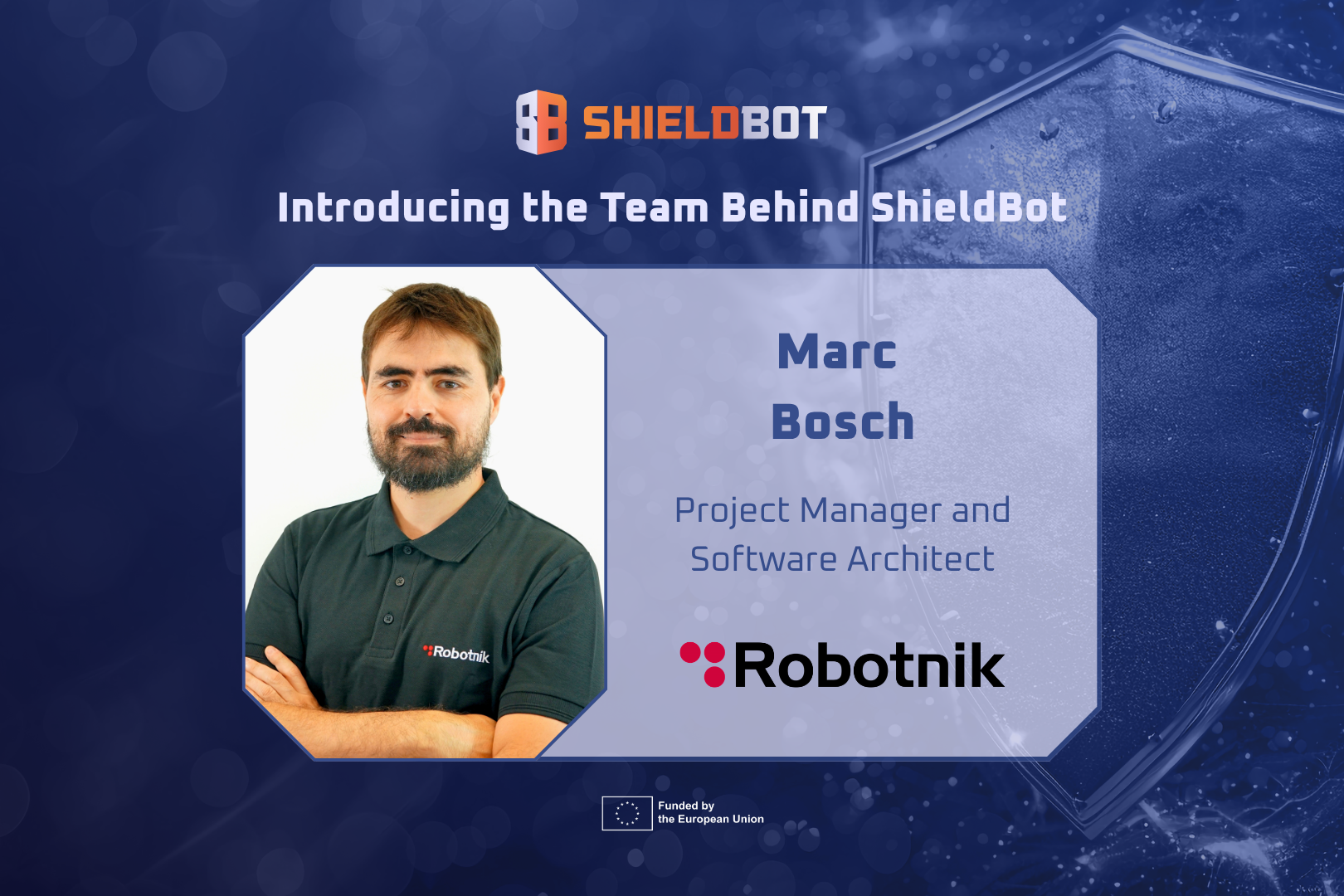
Introducing the team behind ShieldBot: Meet Robotnik
Robotnik Automation is an innovative Spanish SME specialising in mobile service robotics, focused on mobile robot platform development and manufacturing, and mobile service robotics R&D and engineering projects. They are certified in the design, manufacturing, and commercialisation of products and systems based on robotics technology, as well as in R&D management for developing robotics projects. Marc Bosch is a Project Manager and Software Architect at Robotnik, with a background in mobile robotics software engineering. At ShieldBot, he leads the task responsible for mobile platform development, focusing on adapting our platform for indoor applications. ''Robotnik brings its RB-ROBOUT mobile platform and advanced ROS-based navigation software designed to operate safely in dynamic construction sites. My role is to lead the development and adaptation of this mobile base to integrate seamlessly with the manipulation payload.'' - Marc Bosch, Project Manager and Software Architect at Robotnik. Why did you join ShieldBot? I joined ShieldBot to help bring mobile robotics into the construction sector, an industry that has traditionally lacked automation. It is a great opportunity to evolve our RB-ROBOUT platform in real renovation environments alongside a leading European consortium. What does Robotnik bring to the project? Could you describe your role in ShieldBot? Robotnik brings its RB-ROBOUT mobile platform and advanced ROS-based navigation software designed to operate safely in dynamic construction sites. My role is to lead the development and adaptation of this mobile base to integrate seamlessly with the manipulation payload. What expectations do you have for the project from your personal/organisational perspective? From an organizational standpoint, we aim to validate a robust, market-ready mobile platform capable of automating key tasks in building renovation. Personally, I expect to demonstrate that dynamic indoor navigation can be deployed safely and effectively in harsh construction conditions. Could you outline what you consider the three principal innovations ShieldBot will develop over the three-year project? The primary innovation is introducing mobile automation into heavy, hazardous construction tasks that are traditionally performed manually. Additionally, it combines a modular family of specialized robots with real-time digital twin monitoring and safe human-robot interaction on-site. What impact will ShieldBot have on industry and society in the short and long term? In the short term, it will reduce physical strain and risks for construction workers while accelerating renovation processes. In the long term, it will drive the digital and automated transformation of the sector, making building maintenance and insulation more efficient and accessible. How do you see advanced robotics and sustainable practices transforming the European construction and energy building efficiency sector? What benefits can it bring to science, economy and society? Combining robotics with sustainable practices addresses critical labour shortages and improves working conditions across European job sites. Economically and socially, it leads to faster, safer building upgrades and helps accelerate Europe's overall decarbonization goals.
ShieldBot Featured in Spanish Sector Magazine Rehabilita con Éxito
On 16 October 2026, the Spanish sector magazine Rehabilita con Éxito published the article “Robótica para rehabilitar edificios” (“Robotics for renovating buildings”), featuring ShieldBot and its work on robotics and artificial intelligence (AI) for the energy renovation of buildings. The article presents ShieldBot’s work on automated solutions to improve thermal insulation, increase worker safety and optimise interventions in existing buildings. It also highlights the role of IDEKO, ShieldBot’s project coordinator, in driving this European research and innovation initiative forward. Below, we summarise the main points of the article: Tackling the Barriers Facing Building Renovation ShieldBot is funded by the European Union’s Horizon Europe programme and brings together eleven organisations from six countries. The project aims to overcome some of the main barriers the construction sector currently faces: high renovation costs, a shortage of skilled professionals and the need to carry out complex work in hazardous conditions. The article describes energy renovation as one of the major challenges facing European construction. Citing data gathered by the project, it notes that buildings and the construction sector account for around 34% of global energy consumption and 37% of direct and indirect CO₂ emissions. In this context, automating certain tasks can help to accelerate the renovation of the building stock and improve the quality of interventions. Intelligent Robots for Energy Efficiency ShieldBot combines advanced robotics, AI and new sustainable materials to develop systems capable of carrying out insulation, inspection and assembly operations, both indoors and on façades. As the article points out, our aim is not only to increase productivity, but also to reduce workers’ exposure to physically demanding or potentially dangerous tasks. IDEKO Leads the Technological Development The article highlights the role of IDEKO, which is responsible for the scientific and technical coordination of the project and contributes its expertise in mechatronics, machine dynamics, vibration control and advanced sensing. One of the main challenges identified in the article is enabling robotic systems to operate in the changing, unstructured environments that characterise renovation sites. Unlike a factory, where working conditions are usually controlled, every building has its own geometry, obstacles and construction features. For this reason, the researchers are working on robots that can adapt their behaviour to the real conditions of each intervention, while maintaining the stability and precision needed to place insulation panels or repair building envelopes. Three Robotic Technologies for Building Renovation ShieldBot plans to validate three technology platforms in real demonstrators over the three years of the project: Flexible robotics for interiors (InnerShieldBot): systems designed to facilitate assembly operations and improve the precision of the work. Drones and climbing robots for façades (InspectionShieldBot): combined solutions to inspect exterior surfaces and reach areas that are difficult to access. Cable-driven parallel robots (FaçadeShieldBot): devices designed to install external thermal insulation systems without the need for conventional scaffolding. These technologies will be complemented by planning and management tools based on digital twins, Building Information Modelling (BIM) and AI algorithms. Combining these resources is intended to make interventions more coordinated, adaptable and efficient. Sustainable Materials and Less Waste ShieldBot’s innovation is not limited to automation. The project is also investigating the use of bio-based insulation materials and recycled products, with the aim of reducing the environmental impact of renovation work and supporting the circular economy. Integrating these materials with robotic systems seeks to optimise their installation, reduce waste and move towards more sustainable ways of building. In this way, ShieldBot addresses energy efficiency from an integrated perspective that combines technology, materials and new working methods. Towards Safer, More Precise and Automated Renovation The article presents ShieldBot as a commitment to bringing technologies that are already transforming other industrial sectors into the building sector. Using robots to inspect façades, install insulation and carry out precision work opens up new opportunities to tackle complex interventions, reduce occupational risks and improve renovation processes. The article also points out that these solutions still have to prove their effectiveness in real conditions, while noting that their development reflects a growing trend towards the digitalisation and automation of the sector. Validating the three platforms in real demonstrators is precisely the next step in ShieldBot’s work. As the article puts it: “The renovation of the future will not depend solely on new materials or construction techniques, but also on the ability to incorporate intelligent technologies that make it possible to intervene in buildings in a more efficient, safe and sustainable way. With projects like ShieldBot, robotics is taking a new step towards its integration into energy renovation works.” (translated from Spanish) Thank You, Rehabilita con Éxito The ShieldBot consortium would like to thank Rehabilita con Éxito for featuring the project and for helping to raise awareness of the potential of robotics in sustainable building renovation. 🔗 Read the full article (in Spanish) Photos: IDEKO (IDEKO website) Follow our journey Join our newsletter
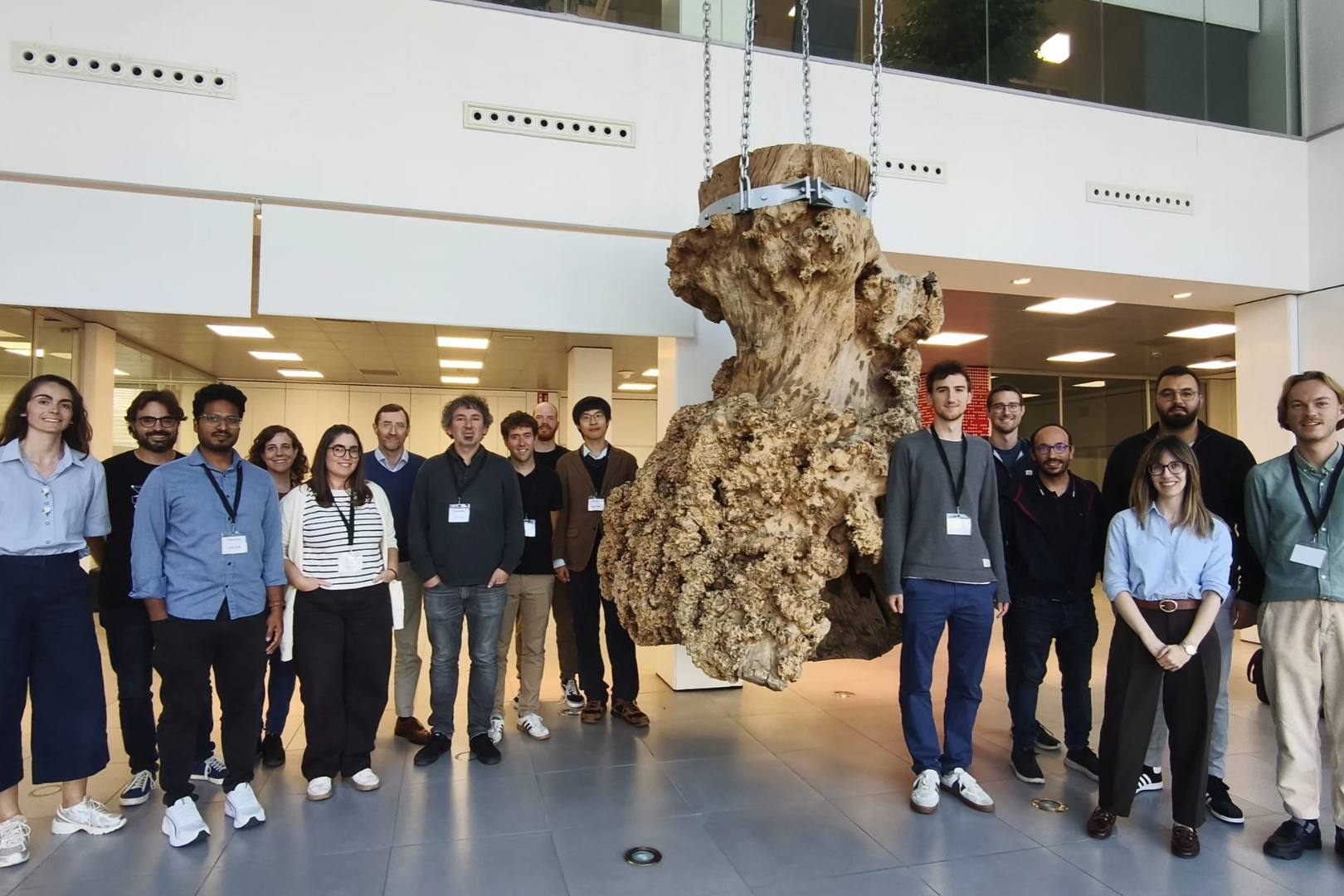
ShieldBot Consortium Meets in Valencia to Mark the Project’s First Year Hosted by Robotnik
On 13 and 14 October 2026, the ShieldBot consortium gathered in Valencia, Spain, for its consortium meeting, hosted by Robotnik Automation. The meeting marked the end of the project’s first 12 months and brought partners together to review progress and align on next steps to make construction and renovation more sustainable and efficient. Marc Bosch Jorge, Project Manager at Robotnik Automation, welcomed the partners to Robotnik’s facilities and opened the meeting. Robotnik’s role in ShieldBot is to provide the mobile base that will carry the Inner-ShieldBot (a robot that will lift insulation panels in walls and ceilings during the construction of new buildings and the renovation of old ones). Reviewing ShieldBot’s First Year The first day began with an overview of the project’s progress since its November 2025 launch. Partners reviewed ShieldBot’s key advances during the first year, exchanged ideas and discussed priorities for the second year, which starts in November 2026. Progress on ShieldBot’s Robotic Solutions On the second day, partners shared updates on the project’s demonstrators. ShieldBot addresses three demo cases: interior wall and ceiling construction in office buildings, inspection and maintenance of exterior building façades, and exterior façade insulation of multi-family dwellings. These are addressed by three robotic innovations: InnerShieldBot: robotic thermal shielding for interior walls and ceilings. InspectionShieldBot: an advanced sensor system for assessing building exteriors. FaçadeShieldBot: a robotic system for installing thermal shielding on façades. Robot Perception and Human - Robot Interaction A dedicated session focused on ShieldBot’s innovations in robotic perception and human–robot interaction, primarily based on cameras and sensors. This work supports one of the project’s core principles: robots that work alongside construction workers and support them, rather than replacing them. Requirements, KPIs and Next Milestones Alongside the technical discussions, partners reviewed the project requirements and KPIs and looked ahead to the upcoming milestones. The consortium also discussed plans to maximise ShieldBot’s dissemination and exploitation potential so the project’s results reach construction companies, building owners, researchers, and policymakers. Visiting Robotnik’s Facilities The ShieldBot consortium would like to thank the Robotnik Automation team, especially Marc Bosch, Jorge and Ángel Soriano, for hosting the meeting and making it possible. Follow our journey. Join our newsletter
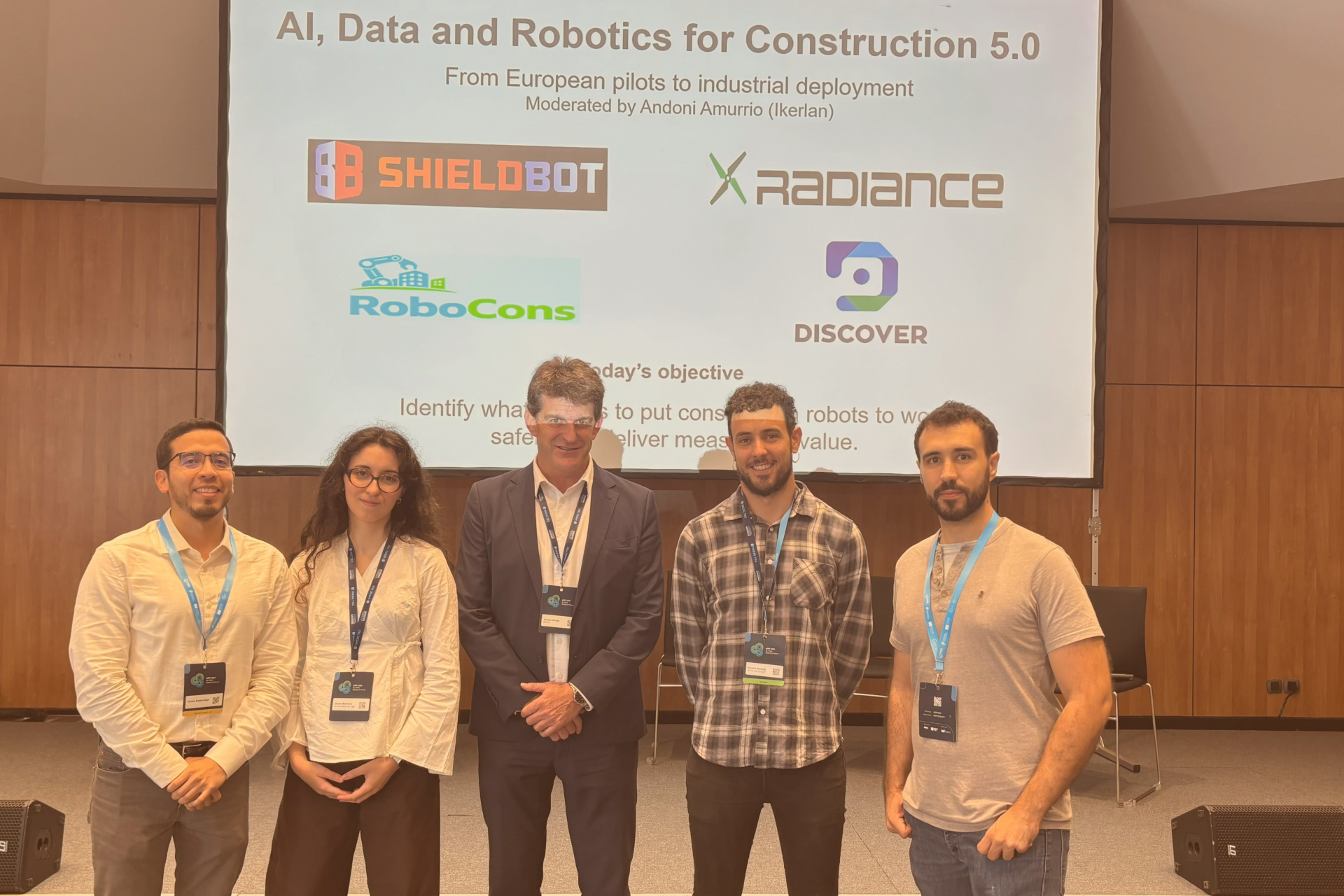
ShieldBot joined Tech4EUConstruction Projects at ADRF26 to Discuss Construction Robotic Deployment
ShieldBot took part in the AI Data Robotics Forum (ADRF26), held on 13–14 October 2026 in Porto, Portugal, by contributing to a workshop organised by the Tech4EUConstruction cluster. Titled “AI, Data and Robotics for Construction 5.0: From European Pilots to Industrial Deployment”, the session took place on the second day, 14 October, from 14:30 to 15:45, in the Infante Room. It brought together four Horizon Europe projects, ShieldBot, DISCOVER, RADIANCE and RoboCons, as complementary cases to discuss how European research and innovation can become safe, interoperable and deployable solutions for construction and renovation sites. Tech4EUConstruction Cluster partners participating at ADRF26 The workshop was moderated by Andoni Amurrio (IKERLAN | RoboCons). The speakers were Jorge Rodriguez (Aldakin | RoboCons), Juanan Arrieta (IDEKO | ShieldBot), Carlos Saldarriaga (CDEI-UPC | DISCOVER) and Gálata Martínez (Universidade de Vigo | RADIANCE). Juanan Arrieta represented ShieldBot on behalf of IDEKO, the organisation coordinating our project. During the session, the projects presented their different robot architectures for building and construction. The speakers then sparked a debate on the future exploitation of the results and on how to bring them closer to the industrial world. The workshop set out to address five key questions: what data needs to be captured and shared, how robotic systems can be safely validated on real sites, which value metrics matter to contractors and building owners, how interoperability and worker acceptance can be addressed, and what capabilities and skills are needed to scale European construction robotics. According to Juanan, the forum itself offered a wide range of technological content and many ongoing EU projects across five to six parallel sessions over the two days. It also came at a politically relevant moment, as the form and scope of the future EU partnership on digital topics under FP10 are still to be defined. ADRF26 is a reference event for the AI, Data and Robotics community, with a great deal of technological content and many EU projects under way. In our workshop, the speakers sparked a debate on how to exploit the results in the future and how to bring them to the industrial world. Juanan Arrieta, IDEKO. Tech4EUConstruction Cluster during their Workshop at ADRF26 About ADRF26: The AI Data Robotics Forum The AI Data Robotics Forum (ADRF26) is a reference event for the AI, Data and Robotics (ADR) community. The Tech4EUConstruction workshop contributed to the forum’s themes by showing how AI, data and robotics converge in construction, from autonomous robots and exoskeletons to digital twins and AI-based planning. ShieldBot’s participation follows the cluster’s workshop at the European Robotics Forum 2026 in Stavanger, continuing the joint effort of the Tech4EUConstruction projects to bring robotics and AI closer to real construction sites.